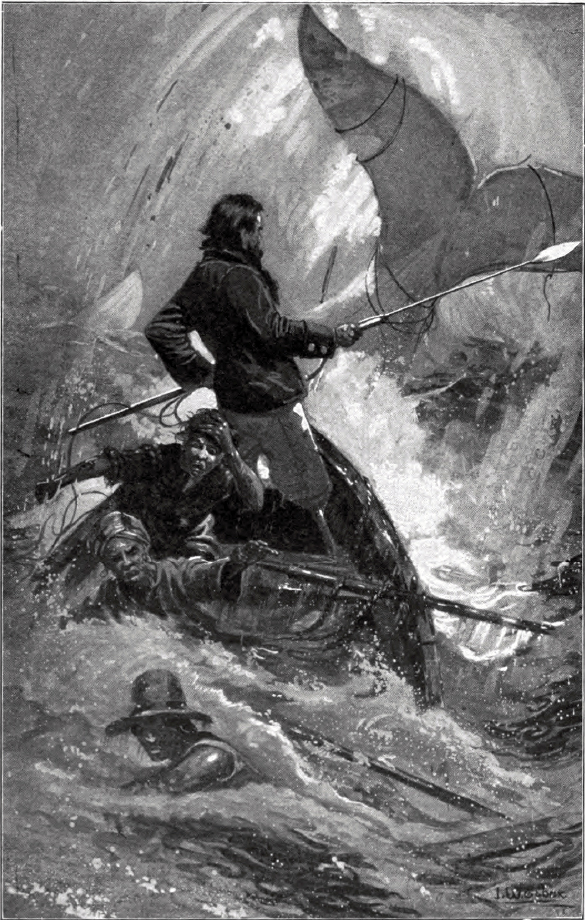
Moby Dick helps us
understand digital culture because it deals with a vast array of themes that
have only become more pertinent and important in the digital age. One such
theme is that of fixation. In the digital age, it’s easier than ever to get wrapped
up in just one interest as it is easier than ever to find massive amounts of
content on that topic. This has caused problems in several ways, perhaps most prominently
with videogame addiction, fandoms, and social media and other forms of digital
communication that take a lot of time and energy to keep up with.
Moby Dick teaches us of the dangers of
obsessive fixation, but also explores the psychology of it in realistic ways
that could help us understand the mindset of those who become too fixated on
the digital world and begin to neglect the real world. Also, it helps to show
the merits of fixation as well that can easily go overlooked. For instance,
Ahab was certainly crazed, but he also created a strong sense of community and
brought different kinds of people together for a single cause. Obviously, Ahab’s
methods and reasons were wrong, but that doesn’t mean that passionate interest
can’t also lead to a strong sense of community among a diverse group of people.
Moby Dick shows both sides of this coin,
and both obsessive fixation and healthy passion have only become more important
in the digital age as new technologies provide greater connectivity and
greater access to content and people than ever before, raising both opportunity
and danger.
Literature and art have always instructed humanity on how to live,
and Moby Dick proves that they will
continue to do so in important and powerful ways that expand people’s perspectives
and open their minds to the broader world around them. In some ways, you might
say that Moby Dick is more important in the digital age than
ever before, and its study has only become more important. Moby Dick can and should be applied to aspects of digital culture
whenever it is taught.
Here are some quotes and initial thoughts for my investigation of connectedness and isolation through the lens of Melville's Moby Dick:
"It is a book which could only have been written in America" (vii-viii)
"Melville wants the whole world in--particularly the human world; hence the slightly improbable spectrum of the crew of the Peqoid" (ix). --> ship as a microcosm of America
Sea as the new frontier
"Ishmael, the whale-writer, knows that the great Sperm-Whale, 'scientific' or poetic, lives not complete in any literature . . . his is an unwritten life'. [sic] . . . We must not expect to find Moby Dick in Moby Dick" (xiii). --> In some sense, maybe digital culture is not intended to show us humanity but is rather meant to lead us back to an appreciation of that which is real and present within our lives.
"Given the radically orphaned condition of modern man (Ishmael ends as an 'orphan', [sic] which is the last word of his book), a danger that Melville could see was the accelerating drift into disconnectedness of the non-affiliated contemporary individual" (xv).
"How, therefore, men might move from isolation to connectedness was a matter of great moment to him and it pervades the book" (xv).
Now that we've finished going through Moby Dick together in our Digital Culture class, I'd like to look at the end, and what specifically led to it and caused it. We talked in class a bit about how Ahab becomes a kind of anti-Christ in the final three chapters. In three days, he descends further and further into his madness, and ultimately causes the death of himself and his whole crew. Compare this to the story of Christ, who in three days died and reascended to save himself and everyone. In a similar vein, Greg wrote a post about Ahab representing Satan.
It's pretty clear that Ahab caused the tragic ending of his own life, his crew, and even the Pequod, but is it really all his fault? On the one hand, Melville certainly seems to think so, as Starbuck says to him in the final chapter, "See! Moby Dick seeks thee not. It is thou, thou, that madly seekest him!" But as we were looking at this passage today in class, our group found and interesting correlation to another passage just a few pages before it at the end of chapter 132. Ahab remembers his wife and child and almost orders the crew to turn around and take them home, but as soon as Starbuck suggests they just go, Ahab looks away and refuses to give the order. Then he says the following in soliloquy:
"Is Ahab, Ahab? Is it I, God, or who, that lifts this arm? But if the great sun move not of himself; but is as an errand-boy in heaven; nor one single star can revolve, but by some invisible power; how then can this one small heart beat; this one small brain think thoughts; unless God does that beating, does that thinking, does that living, and not I."
Notice the very similar construction between this passage and Starbuck's question later. Perhaps Starbuck heard Ahab's speech earlier and tried to mirror his construction as a rhetorical move in his final plea, or perhaps Melville wrote these two passages with similar construction to invite comparison of their quite opposite ideas (or, you know, perhaps it's a complete coincidence, but I doubt it).
As we looked at these two opposing passages, I tried to put myself in Ahab's shoes and see his logic. Then I realized what his lines actually sounded like to me: addiction. Read this definition of addiction from the American Society of Addiction Medicine and consider Ahab's behavior:
Addiction is characterized by inability to consistently abstain, impairment in behavioral control, craving, diminished recognition of significant problems with one’s behaviors and interpersonal relationships, and a dysfunctional emotional response.
Now, addiction as an idea has exploded into our cultural mindset over the past 50 years, and we're much more aware of it as a disorder than Melville would have been in his time. But even so, it's clear Melville meant for us to understand that Ahab was more than just obsessive.
If he is addicted, then, or suffers from some form of mental disorder, can we blame him for what happened? And if not, what is Melville saying about power structures? It's clear the rest of his crew didn't want to continue pursuing the white whale--Ahab has to remind them of oaths they took and ignores several pleas--but the tragedy still happens because Ahab is the sole commander and no one else has any control. Melville seems to be asking questions about power and leadership, and what happens when leaders go astray or prove themselves incapable. Ahab may not be to blame--but no one had the power to stop him, either.
This may be another reason why Moby Dick rose to prominence in the 20th century. The questions Melville asked here proved to be frighteningly relevant as the world headed to total war twice in one century thanks to leaders with more power than sense. It's almost scary how this book seemed to be most relevant nearly 100 years after it's publication.
Well here's a find if ever I saw one. Some of you know that I am currently in classes studying, respectively, Moby Dick and Paradise Lost, and I've been working at expanding my research base a little bit. Well, in searching for scholarly sources to go with some of the ideas that I presented in my last post, "God in the Whale," I came across a work that draws a really fascinating connection between Milton's Satan and Melville's Ahab. In Leslie Sheldon points draws on the research of other scholars to provide a stunning comparison of the two characters:
[I]n Guttmann's view [ . . . ] "Milton's fable is used to supplement Melville's own." (2) The drawing of Miltonic connections in the criticism is, furthermore, often associated with the contention that Melville interpreted the epic in a primarily "Romantic" and "Satanic School" way, attributing to Milton (as did Blake), (3) an unconscious "sympathy for the Devil," a view apparently given some support by the recently discovered marginalia in Melville's personal copy of Milton's poetry. (4) Fifty years ago, Henry A. Murray claimed that "Melville's Satan is the spitting image of Milton's hero ... the stricken, passionate, indignant, and often eloquent rebel angel of Paradise Lost, whose role is played by Ahab" (5) And as recently as 1998, Paul Giles similarly noted that Ahab's "desire for revenge on the white whale is as anguished as Satan's quest in Milton's poem for vengeance against God."
You have recently announced that in your upcoming game, Assassin's Creed IV: Black Flag, a way to gain materials and money for character and ship upgrades will be through harpooning whales, sharks, and other large sea creatures. Let me start by congratulating you on the careful consideration that appears to have been taken on this relatively small mechanic within a much larger game, as evidenced in this video. However, I wish to present you with an extraordinary opportunity for such a mechanic which you may have overlooked. (Due to the nature of secrecy surrounding large video game releases, I realize you may already have considered the option that I am about to present to you, but I'd like to present this proposal before the game releases so that you might consider it before the game is in it's final form.)
As you probably gathered from the title of this post, my proposal is simply this: put Captain Ahab and Moby Dick in AC4. I believe this could provide a great gameplay experience, visual spectacle, and satisfactory narrative, as well as fit in quite nicely with the aesthetic and philosophy of both Black Flag and the Assassin's Creed series in general. In addition, it could open an interesting and satisfying inquiry into the relationship between Herman Melville's classic and modern video games as a vehicle for artistic expression.
Captain Ahab and the story of Moby Dick fit perfectly into the Assassin's Creed universe. Not only is he an important figure in literary history, he has a violent and mysterious past, a missing leg, and an inhuman drive for revenge. The AC universe prides itself on making "history our playground," and has already included several important historical figures from Leonardo Da Vinci to Benjamin Franklin. While Ahab is a fictional historical figure, the character is still quite important historically. Also, adding fictional historical characters might help keep the franchise fresh, which is a well-documentedconcern forthe seriesin general.
The whaling aspect of the game is exciting because it's dangerous, tense, and the animals you face are large and powerful. Your developer videos already lead players to imagine hunting even larger animals like blue whales and great white sharks (see video below starting at 7:45):
With danger, tension, and ever-larger animals already being a focus, what better climax to this experience could there be than facing the single most infamous sea creature of all time: the white whale himself, Moby Dick?
The Pequod could be a ship just like the hundreds of others already floating around the open Caribbean world of AC4. When the Jackdaw approaches Ahab's ship, his call could be heard coming over the wind: "Ship ahoy! Have ye seen the White Whale?" The player could choose to stoop and converse with Ahab or ignore him (or attack him, I suppose). If the player does talk with him, it unlocks an open-world side mission to be on the lookout for the White Whale, which can only be unlocked to be discovered after a certain percentage of the main story is completed. When the White Whale is unlocked, the player can happen upon Ahab again if they go to the right spot on the map and catch the crew in the very act of chasing down the great Moby Dick. Again, the player could choose: ignore Ahab, help out, (or attack, but really, that would be quite diabolical at this point). Depending on how well-prepared and sure-handed the player is, perhaps he/she could change the course of literary history and save the Pequod. Or, alternatively, if you ignore Ahab at this moment, when you come back you can find the wreck of the Pequod and try and take on the whale on your own (no easy feat, to be sure).
Not only does Moby Dick fit in with the tone and setting of AC4, one of it's largest themes could be interestingly explored through an open-world game like Black Flag; namely, the cost of monomaniacal purpose. For many players, the pursuit of the white whale could become such a high priority that a major drive of their gameplay for 20+ hours could be dedicated to preparing for and seeking out the whale. Most likely, on the first attempt, the player will die--rendering all of that work a failure (for the brief moment a loading screen allows). In that brief moment, the player could feel everything Ahab felt in his final moments to some degree. Questions of meaning, time, satisfaction, power, failure, and futility would naturally rise in the player, forcing an easy identification with Ahab himself. Ahab could even give several side missions to the player before the hunt ever unlocks, taking Edward and his crew all over the map looking for this or that in preparation for the big day. Video games are perhaps better suited to transfer a taste for how truly driven Ahab was to get the whale, as a player has to perform actions and develop skills to get through the plot, but a reader has only to keep flipping the pages (which, with this book in particular, might not be so easy, really, but the point still stands).
I realize the side-story which I have outlined here might be impossible to completely implement by release, but I can wait for DLC. If you do nothing to include Moby Dick in Assassin's Creed IV: Black Flag, I believe you will have missed a huge opportunity to create an awesome climax of the whaling aspect of the game, as well as an exciting and driving supplemental narrative, great gameplay, awesome visual spectacle, and the chance to "play with history" like never before in any Assassin's Creed game--or, indeed, any game ever made.
In short, give us Ahab, and let us do what he never could. Let's change the course of literary history. Let's kill that beast.