Showing posts with label posted by Aleesha. Show all posts

Wednesday, December 18, 2013

Proposal: Creating a Class All About Ebooks

In this time of the digital age, people have had to make a lot of adjustments to a new digital culture. One of these adjustments is to how people are reading and consuming content; it’s not just in print format anymore. With today’s technologies, people can have access to lots of information virtually anywhere, provided there is an internet connection.  People read texts on their phones, computers, tablets, and e-readers.

Ebooks are gaining more and more popularity. To adapt to this change from a print culture to a digital culture, there needs to be a greater understanding of how ebooks work and also how they are published. To ease into this adaption, I suggest that universities start offering more classes regarding how to publish ebooks.

Benefits to learning about ebooks will be of great use to those who are interested in the future of the publishing business and those who are interested in self-publishing. To start, people should get used to the idea of using them. Some people are just not used to the technology quite yet. Getting them used to the technology as it is now will prepare readers for the future when books will be on a digital reader and when they will be more interactive, such as infusing images, video, and audio with the text.


To be prepared for studying literature in the digital age, we should know how to consume and create content in the form of ebooks. Despite the resistance of a few traditional-styled people, this is where the technology is going. People who are interested in publishing, commercial or self, should especially be adapt to this new format, because it is still changing and has the potential to change even more. So, as an editor who is excited about the future of this technology, I propose that a class about ebooks, how to use them and how to make them, should be an added class to the editing minor.

Humans versus Machines

Humans use machines to make a task simpler in some aspect. They are generally thought of as two separate entities—the human, which is living, can think, can feel, and the other is the machine, not living, can’t think for itself, unfeeling, and soulless. When these two are put together, however, they can accomplish things that wouldn’t have been possible without it. In Moby Dick, there are a few examples of humans working with machines in order to accomplish something or have new meaning.

We talked about in class how Ahab used his crew as a machine to sail to find Moby Dick. The crew itself only followed Ahab’s orders and didn’t think of a different viewpoint together. It was essentially a static figure that lended itself to Ahab to use for only Ahab's purposes. There were a few other examples that I thought fit this example of humans and machines. Queeueg shaves his face with his harpoon, using an unconventional tool to do a normal thing. To Ishmael, and probably to some others, this would seem barbaric; however, it got the job done, so why should it matter? Another point to bring up is about Moby Dick himself. In the chapter, The Whiteness of the Whale, Ishmael is describing the good—it’s purity—and the bad--of the color white in the whale, in other words, the human and the machine parts that make up Moby Dick. See Shelly’s post for a little more elaboration.

The two working together make a new kind of hybrid—part human and part machine. This hybrid, because of it is part human, is still considered to be human, however there are few exceptions to that. The biggest one I think was in the example of Ahab’s crew hybrid chasing Moby Dick, something that was also hybrid. Which won in the end? Moby Dick. Why? You could say that in the end, it was his humanity, his instincts that saved him. The crew still acted together as a machine in order to capture Moby Dick. 

Wednesday, December 11, 2013

You Are What You Pin: An Analysis on Pinterest Identity

Below is the link to my final paper.


P.S. Sorry about the screenshots from the survey. They are getting messed up when the .pdf is uploading to Google Docs, and I'm not sure how to fix it. Here are the links to the pinboards if you would like to look at them.

Extroverted
Introverted
Sensing
Intuition
Feeling
Thinking
Prospecting
Judging

Tuesday, December 3, 2013

Pinterest Project Proposal

Working Title:
You Are What You Pin: Analyzing People Identities Based on Pinterest Pins

Working Thesis:
As people become involved with Pinterest, they not only showcase their interests but also show their identities through their likes, pins, and repins on Pinterest.

Preliminary Exploration:
For my preliminary exploration, I have been gathering data via Google Alerts--not that much comes up regarding Pinterest and identity, but I have found some good articles on social media in general and identity, which I think have pointed me in the right direction.

My previous blog posts have also looked at Moby Dick and Pinterest and a couple of curation posts here and here. What got me interested in this topic in the first place was reading Girl Wide Web 2.0, especially the chapters that dealt with identity and social media.

Relevance:
I think that this is topic is relevant because as we are spending more time with social media, we are needing to adjust and find ways to best represent ourselves online. There are different ways that people can represent themselves online, such as personally or professionally. From a Pinterest account, not only can people show their likes and interests but they also can show what is going on with their lives at the current time, such as a decorating for a new house or planning a party.

Format:
For the format of this project, I've decided to do a survey (click right here if you would like to take it) about Pinterest and identity to see if I could find a correlation between the two. I will then write a paper describing my background research and my findings and conclusions from the survey.

Outlet:
As stated from my last blog post, I was interested in the CATaC Conference because its theme is the closest to what I want to present. The papers can be in a short (3-5 pages) or long (10-15 pages) format. Since I plan on including the stats of my survey, the paper will be in the longer length. The paper is due on February 14.

Curation:
My curation includes gathering data from the survey and pinning images on Pinterest that correspond with the personality traits I used in the survey. The pinboards are as follows: extroverted, introverted, sensing, intuition, feeling, thinking, prospecting, and judging--the pins are typical of those personality traits, and I tried to get as wide of a variety as possible.

Social Proof:
I've gotten lots of people to respond to my survey so far, and I've had a couple of shares for my survey on Google+ and Facebook. I've also shared the survey to communities on Google+ (the Pinterest and Digital Identities communities to be exact), and I am looking forward to sharing my conclusions with these groups after I finish this project.

Next Steps:
The next steps include to finish gathering data from the survey, compile it all, and see if there really is a strong correlation between personality traits and pins on Pinterest. Since I don't know exactly what they will entail, I want to gather more secondary sources about analyzing identity from personality traits so I can see if the results from my survey might actually mean anything. It will be interesting to see how this turns out.

That's it for now. I would appreciate any feedback and will offer up my feedback for your proposals as well.

Friday, November 29, 2013

Possible Venues for the Final Paper/Project -- Pinterest and Identity

Finally getting around to posting my list of venues for my final paper on Pinterest and digital identity. I really liked Greg's suggestion for the Popular Culture Association and American Culture Association for the Women's Studies conference, but since the deadline has passed, I thought I should see if I could find something with future deadline and similar subject matter.

Social Media and the Transformation of Public Space -- Although this venue's mission statement says it wants to provide opportunities for doctoral and master's students, it doesn't put that stipulation on those who wish to submit their work. I feel like this would be a good choice for me and lots of other people in my Digital Culture class. It offers a very broad range of topics (such as crowdsourcing in journalism and social media in journalism, +Kayla Swan) , but the one that I would be interested in is the topic of social media and new practices of identity. Check it out if your topic has anything to do with social media. Proposals are due March 7 and full papers in May.

CATaC 2014 Conference -- Culture, Technology, and Communication (CATaC) holds a biennial publication and conference for subjects regarding culture, technology, and communication. This year's conference is dealing with Design/Production and Practice of the aforementioned topics. The topic that I'm interested in is in the Practice category: the construction of identity using online social media. I think this is the venue that I'm leaning toward submitting to. Because I am focusing on one specific social media platform (Pinterest), I think this will be the best option for me. Papers are due February 14.

I think that's it for my potential venues. While doing this research, I also found some options for a couple of my classmates. For +Brittany Hansen I found A Hands-on Approach: The Do-It-Yourself Culture and Economy in the 20th century. Brittany, I'm not sure what your approach is for your paper, but if you have a good historical background connection, then this might be a good venue for you. Next is for +Lizy Cole: Internet Memes and Visual Culture: A Special Issue of a Journal of Visual Culture. According to the description, they said they were very interested in creative formats for submissions in addition to the traditional essay.

Good luck on your final papers and projects, guys!

Tuesday, November 19, 2013

Teens and Fandom

I decided to be an altruistic scholar on behalf of Victoria (Sorry, Shelly, didn't mean to step on your toes!)

I became interested in the idea of fandom when I was reading the book Girl Wide Web 2.0 for class. It has an article titled “Me/Her/Draco Malfoy: Fangirl Communitites and Their Fictions” by Jaime Warburton that talks specifically about teen girls and their roles in fan fiction. Although fandom wasn't a prominent point I focused on in my research, I think it will be very helpful for hers. (I have the book if you would like to borrow it, Victoria, since it will not be found anywhere online.)

I also wanted to look at the sources the author used to write this article to see if they might be any use to Victoria, and I think I found a few. (And of course, there are more listed in the book, but these are that I felt would be of the most benefit to Victoria that I could also find online.)

“Is there a fan in the house?: The affective sensibility of fandom” by L. Grossberg in The adoring audience: fan culture and popular media edited by L.A. Lewis. You can find it here or by searching on the library website.
“Fan Fiction Online: Engagement, critical response and affective play through writing” by A. Thomas. Australian Journal of Language and Literacy. You can find it here or on the library website.
“Blurring and breaking through the boundaries of narrative, literacy, and identity in adolescent fan fiction” in M. Knobel &C. Lankshear (editors) A new literacies sampler. You can find it here. I was only able to find this source on Google Books, so it only shows a preview of this particular article, but I still think there will be some useful information for you and I think it is very pertinent to your topic.

I also stumbled across this website which has already curated a list of articles regarding fan culture.

I hope this helps, Victoria!

Tuesday, November 12, 2013

Comparing Moby Dick to Pinterest

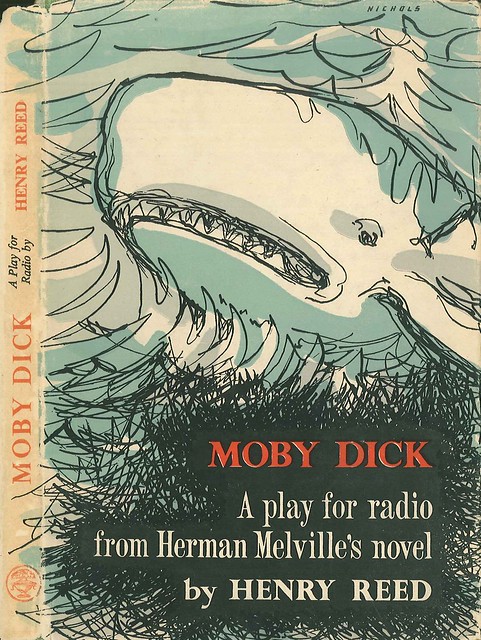
Courtesy of Reeding Lessons from flickr.com
It states in the introduction of Moby Dick, "Melville himself certainly believed that all men are united by the bond of reciprocal dependence, by a community of function and responsibility" (xv). There are the following parts: etymology, extracts, prose, lists, histories, biographies, plays, epics, etc. This is a community working together to present meaning. We've talked about it how it's is one genre, but not really because it's another genre as well. It can't really be identified as ONE genre: It's a compilation of all of its genres and that's where the significance is found.

Pinterest is arguably the same way. If we were only to identify pinners by one pin, one thing that they felt best encompassed who they are, it wouldn't work because it is more complicated than that. They can't be identified by one outfit or one recipe. Instead they are identified by ALL of the pins together.

Wednesday, November 6, 2013

Girl Wide Web 2.0 Video Review

Here is my video review of Girl Wide Web 2.0. First let me preface this by saying that I don't consider myself a very good speaker, so sorry for all of the "umm"s and the stumbles. Also, I'm sorry for the annoying watermark on the video. The software that I downloaded to make the video was a trial, and it didn't tell me until I was done making the video that it was going to add a watermark to it. Yay for hidden stipulations.

Read my Goodreads review here.


Monday, November 4, 2013

Girl Wide Web 2.0 edited by Sharon R. Mazzarella

Image from here
Girl Wide Web 2.0 (check it out on Goodreads or Amazon) is about how girls and women are renegotiating their identities through means of the Internet. The book is written in a series of essays; each author has taken a specific subject of the Internet which girls and women that are participating in and has analyzed how their culture has redefined how they represent themselves online. In the foreword, Dafna Lemish writes, “Through the variety of possibilities of engaging others online, girls … explore new opportunities to express their voices, and so the Internet is involved in self-growth. Some practices involve the construction of very private and individual identities and a creative process of expression. Others experiment with social relationships and create communities of ‘sisterhood.’”

I liked this book and appreciated the perspectives that it had on the evolution of identity online. While there was a lot of valuable information in the book as a whole, there were two particular chapters that I found useful as far as expressing online identities from different cultures: “Degrees of Caution: Arab Girls Unveil on Facebook” and “East Meets West: Is There a Difference Between Tai and American Girls’ Use of the Internet and Negotiation of Identity?”

Friday, November 1, 2013

Curating with Pinterest

First thing is first. Sorry about the late post. I got some exciting news on Thursday and was a little distracted!

For my curation tool, I have been using Pinterest. Pinterest, as you may well know, is a very interesting medium. My purposes in using this as my creation tool are to study identity according to what is posted on individual users accounts. Think of it as "you are what you pin," if you will. I think the main point of Pinterest is used as an expression of individuality, although the interesting thing is people don't really pin their own content; they repin other people's content. I also think this is relevant with the book that I chose: Girl Wide Web 2.0, and I'm excited to see how each contribute to the idea of girls' and women's identity.

Courtesy of jackie vanover on flickr.com

Tuesday, October 29, 2013

Copyright Culture of Pinterest

Since I am using Pinterest as my curation tool, I wanted to look into the issue of Pinterest's copyrights. It's kind of a mess, not going to lie.
Courtesy of Pinterest-Anti-Christ from commons.wikimedia.org

Just looking at the terms of service this is what the user agrees to when they pin their own stuff:
How Pinterest and other users can use your content
You grant Pinterest and its users a non-exclusive, royalty-free, transferable, sublicensable, worldwide license to use, store, display, reproduce, re-pin, modify, create derivative works, perform, and distribute your User Content on Pinterest solely for the purposes of operating, developing, providing, and using the Pinterest Products. 
So, if you put it up for use on your own Pinterest account, just know it has a pretty open creative commons license. Not bad, right?

Wednesday, October 23, 2013

Girl Wide Web 2.0: A Look into Digital Identity

I want to continuing exploring identity, so for my book I chose Girl Wide Web 2.0: Revisiting Girls, the Internet, and the Negotiation of Identity. I'm hoping this book can explain more about how digital identity varies from different cultures and locations.

Preview

Through the preview of the book, it looks like the book does spend some time defining the differences in which girls determine their digital identities, but it also looks like it spends some time with some of the methods that are used online, such as MySpace and fangirl websites. It seems to spend a lot of time on the online communities that girls participate in, which is helpful for defining their identities.

Early Social Proof

No one responded to my update on Twitter. I was unsuccessful doing searching for conversations about the book as well. I'm going to try to reach out to one of the contributors of the book, because it looks like several of them are on Twitter. We'll see how that goes.

Similar Books

Instant Identity (Mediated Youth) by Shayla Thiel Stern
Growing Up Girls: Popular Culture by Sharon R Mazzarella
Grown Up Digital: How the Net Generation is Changing Your World by Don Tapscott

It looks like these books are pretty similar in their intent except for the last one Grown Up Digital. This one's intent lies more along the lines of how digital culture is changing and how the "net generation" is changing it.

Monday, October 21, 2013

The Curation of Pinterest

I'm sure most of us are familiar with Pinterest. You pin something, for example a blog post or a video, to a digital pinboard, and from there, others can see and repin what you have pinned. The entire site is essentially used for curating different content for individuals.

Courtesy of  Bunches and Bits {Karina}

But it does go a little bit further than that. While doing some research, I came across some interesting cases where Pinterest was being used to go beyond the digital world and actually is applied in the physical world.

The first thing I came across what this article titled "Highlights from 'The Pinterest Diet.'" Essentially, this woman wrote a book about how she used Pinterest to lose weight. The author, who wrote this article as well, said, "The diet combines my innovative program of eating clean, satisfying foods with Pinterest's capacity to provide a never-ending supply of recipes, workout plans, and inspiration." A few steps in her plan include creating the pinboards to help achieve this goal and pinning for at least ten minutes a day. She concludes by saying, "By spending time pinning, you're taking care of yourself. You're nourishing your creativity, you're nourishing your mind, and you're nourishing your body. This helps you to refocus on your goals and stay determined to reach them." (I think that's stretching it, but you get the idea.)

Thursday, October 17, 2013

Digital Portfolios

Last week I posted on Google+ about digital portfolios while I was trying to put my own digital portfolio together. Dr. Burton suggested that I follow up on how common they are becoming.

The first thing I did was search to see exactly what is out there when it comes to digital portfolios. Off the bat, I found that there were two main groups using digital portfolios: artists or photographers and students. The artists and photographers are kind of self-explanatory; it's an easy way to display their work. But the students using these digital portfolios are of all ages, elementary- to college-aged students.

There are tons of sites (and tons of pins on Pinterest) dedicated to setting up digital portfolios for kids, which really surprised me. These kids are already dealing with digital portfolios and will probably be mostly using the digital medium as means for applying for jobs in the future. That's how fast this is catching on.


While continuing my research, I came across a video blog that demonstrates how to make a digital portfolio using PowerPoint, which I wouldn't have even thought to do. It's a cool idea if you are considering a way to make your digital portfolio. However, there are websites or apps, such as Weebly or Deviantart, you can use as well, which is how I created my digital portfolio. (If you want to check it out, click here.)

So, what's the big deal? Why are portfolios switching from print or physical copies to digital? Well, for one, it's convenient. If it's on a website, it's really easy to update. For employers, it's easy to keep track of and it doesn't take up a lot of space. Most importantly, perhaps, is that it shows employers that you are tech savvy.

What do you think about digital portfolios? Do you think they are just another way to showcase skills to an employer, or are they more than that? Do you think it's a good idea that kids are starting to incorporate these in their curriculum at such an early age?

Wednesday, October 9, 2013

Identity Crisis: Prewriting -- Midterm 1

Thanks to the wonderful comments from my last midterm post (thanks guys!), I have decided to stick with the theme of identity while writing my paper. Now, I know what you're thinking: That's a really general topic. Yes, but this is the beauty of a prewrite; it helps me to narrow it down further.

I want to head in the direction of identity crisis. We as people "wear different hats" when it comes to aspects of our lives, like Amber pointed out in the comments of my last post, with the different roles we play as people: students, parents, employees, etc. Our identities online are no different. I, for example, am more professional on my LinkedIn profile than I am on my Facebook profile.

Sometimes because we are trying to juggle so many different roles, we can forget which role we are supposed to be playing, sometimes for a moment or sometimes even longer.

The most obvious example in Moby Dick was Ahab, who forgot about his other roles altogether and made revenge his only focus. But I want to look at other characters like Ishmael, Stubb, and Pip when they mixed up their roles with other personal roles and how that affected them and/or the crew.

Then I want to tie that back into digital identity and how in some cases people get so involved with their digital identities that these become the dominate identities rather than their physical selves.

What do you think? I would appreciate any insights or comments that you might have!

Sunday, October 6, 2013

Shifting from Physical to Online - Midterm 1


Here are the blog posts I have written so far this semester.
The themes I seem to be the most interested in are the themes that center on how we are shifting traditions from physical to online. Although there are pros and cons to this, the benefits seem to outweigh the problems. A universal culture has developed, but it's all digital. People seem to like it for a myriad of reasons. It's easy and more convenient to access this information. And other times, it's about the kind of information people can access or the types of audiences they can reach.

People can collaborate with one another to make something completely new and different, just like Eric Whitacre's virtual choir. People can get information on any subject they can think of and they don't have to physically go anywhere to get it. People can be self-taught on any subject. People can send messages and connect with friends or family instantly, no matter their locations. The list can go on and on. The point is, we would not be able to do this (at least, not very easily) without the help of the digital culture that is available through the Internet.

We have adapted to this new culture. Kylee, Ariel, and Greg both mentioned that technology has become an extension of ourselves, which can be good and bad, like Derrick discusses in his post. In a way, we are now the product of transmedia; we are adapted and changed for another medium.

The questions I wish to ask are as follows: Are all of these changes necessary? And why do we tend to change when we represent ourselves online?

Thursday, October 3, 2013

Peer Reviews through Digital Media

After this was mentioned in class, I wanted to find out a little bit more about how content that is not peer-reviewed can still be considered a reliable source of information.
I came across this article, which talks about the new system of peer-reviewing when content is published instantly.
“In the case of social platforms, the metric that drives discovery is how much interaction there is with your content on the social platform in question. Examples of such interaction include the numbers of followers you have and the number of times your content is shared, liked, commented on, [and] viewed.These metrics show how much interest there is in your papers, and how widely they are read right now, and thus provide a sense of their level of impact.”

Courtesy of birgerking from flickr.com

Personally, I’m not sure I’m ready to accept this as a reliable peer review. While something may be popular and getting lots of likes and shares on Facebook (we’ve all see, or even shared, those Huffington Post articles), that doesn’t mean it is ready to be cited in an academic paper.  While it’s great that ideas and content can be published instantly, they still need to take the next step to phase three of academic blogging to be taken seriously.

So, what are your thoughts? Can something be considered a reliable source if it is getting a lot of attention online? 

Monday, September 30, 2013

Long Tails, and Machines, and Algorithms, Oh My!

Today’s discussion coupled with last week’s discussion about long tails got me thinking about the algorithms that are used in digital technology, particularly things like Google’s predictive search feature. The machine can anticipate what we want. Eerie.


(This was an awesome video I found about becoming an “Autocompleter” for Google. I think this was how they did it before they used algorithms. Haha!)

This was an interesting article from PC World about using the predictive algorithms. It touches on topics like Facebook friends, Pandora music, online dating, and Netflix movies.  The most fascinating thing to me, however, is that it points out that Google is changing the way we think because it is thinking for us. Because of this, we are not remembering as much as we used to because we rely on the internet to remember, in a way, for us.


So what do you think? Do you think we rely too much on these algorithms to tell us what we should think, or is it another nifty way to sort through all of the material that is online to find the information we are looking for?

Friday, September 27, 2013

Does a Company's Presence Online (or Lack thereof) Affect their Credibility?

Jobs that are related to technology and the humanities have been on the rise. That’s not really news. But sometimes it surprises me just how important things like social media and programming skills have become to companies. Just today, I went to the LDS Publications meeting where they were recruiting interns, and two of those internships are heavily involved with digital media.

Here is a screen shot of the job description. (Sorry if it's a little small. There needs to be an option between large and extra-large sizes for photos on Blogger.)


There’s also a job board called mediabistro online that has an entire section dedicated to posting tech jobs that are related in some way to the media. Again, see the screenshot.

Monday, September 23, 2013

Accepting New Technology as Tradition

After today’s lecture from Dr. Wickman, I got thinking about how traditions are often reasons why some people are not as willing to be as explorative as others.

In chapter 69 on page 278, it describes what happens to the whale after its carcass is let go in the ocean: "When the distance obscuring the swarming fowls, never the less still shows the whit mass floating in the sun, and the white spray heaving high against it; straightway the whale’s unharming corpse, with trembling fingers is set down in the log—shoals, rocks, and breakers hereabouts: beware! And for years afterwards, perhaps, ships shun the place; leaping over it as silly sheep leap over a vacuum, because their leader originally leaped there when a stick was held. There’s your law of precedents; there’s your utility of traditions; there’s the story of your obstinate survival of old beliefs never bottomed on the earth, and now not ever hovering in the air! There’s orthodoxy."

As Dr. Wickman pointed out in class, this relates to religion. But I would like to postulate that this idea of blind following that is being suggested is not only pertinent to religion but to technology as well.
People don’t like there to be a lot of changes in their lives. Throwing changes into a normal and structured life, at least for people like me, can give a “you-threw-off-my-groove” kind of vibe, and it takes time to accept the change. We are creatures of habit.

Courtesy of  Mike Licht, NotionsCapital.com, flickr.com