Showing posts with label reading video games. Show all posts

Wednesday, December 18, 2013

Final Exam Essay 2: English Major Update

Updating the English Major to the digital age could be advantageous to professors, students, and the broader academic community in several ways and could keep the major relevant in a world that increasingly questions its importance. One such way to update the major to the digital world would be reshaping the course outcomes to always include a project that somehow extends beyond the classroom into the broader world and enter the real-world conversations happening on that topic, rather than just live and die in the classroom. We've studied ways to do this in our digital culture class this semester, both discussing ways to socially optimize our research to both prove its relevance and find communities interested in it and ways to reach beyond the classroom with our research. Ideally, students would have the flexibility to follow their own research topics and trends from class to class, building over the course of their college career a portfolio of work as well as an individual voice, style, and research expertise.

Such an approach would actually be closer to the original spirit of university study, to come and follow a specific passion and study it out over a long period of time, building skills and talent through mentoring and professorial guidance to prepare to go out into the world and show a new and unique idea. Ironically, updating to the digital age would in this way also be a return to the roots of higher education. Such a system would allow students to leave their university not only with a degree, but with a reputation and a direction for further study and work that would lead more naturally into graduate study and/or the workplace.

Increasingly, the digital world requires students to have not only degrees, but portfolios to enter the work field. Graduate schools also always require a writing sample and a clear sense of research direction from a student to be considered for admission. The current model doesn’t allow much time or room for students to build such a unique voice and direction in their research. By updating the English major for the digital world, we can allow students to not only build such a voice and direction, but also build connections, communities, and networks by way of publication and sharing of their ongoing research such that by the time students graduate, they already have in place everything they need not only to apply to graduate school or the workplace, but to continue to succeed there as they have a wide network and body of work to pull from and build on.

Currently, such a model isn’t followed because the focus of undergraduate study is to expose students to a broad range of literary genres, periods, and works. This ideal is not wrong, and could still be preserved in the proposed update to the English major. For instance, I have gone through my college education according to the traditional English major, taking classes from a broad range of time periods and genres to fulfill the major requirements for graduation. However, over the past school year, I have also pursued research relating videogames to literature, and have been able to apply every one of my classes to such a study. In Early American Literature, for example, I studied how Edgar Huntly set up many expectations for the American novel that have persisted into American videogame story tropes, specifically the Assassin’s Creed series. In Advanced Studies in Genre, my section was focused on the rise of the British detective novel, and I was able to explore not only film adaptations of Sherlock Holmes, but videogame adaptations as well, and deal with the issues of a videogame trying to make the player feel like a detective as intelligent as Sherlock Holmes. In a Shakespeare class, I was able to explore how Shakespeare legitimized English language drama as a high form of art and relate that to possible ways videogames could become a culturally legitimate art form in our own time.

As I began to follow this single strain of research in all of my classes, I opened opportunities that I hadn’t even considered before for myself. I ended up presenting alongside a Ph.D. candidate and an established professor at the annual conference of the Rocky Mountain Modern Language Association, and scarcely two months later had three offers for publication on three separate articles I had written in the vein of videogames as literature. I started my own blog to get more of my thoughts out there, and within a month of starting it had over a thousand page views and several comments that led me to people interested in similar topics that I could connect with. Also within a year, I had connected with some big names in the field by keeping to socially optimized research methods and had personal feedback from major writers and creators that have lent intelligence and credibility to my research. My prospects for graduate school and a career have increased considerably as a result.


This kind of path through the English Major should not only be more accepted, but encouraged as it is the best way to ensure that students land on their feet after graduation and have a clear direction with their education. Without such an update, the English major faces increasing obscurity and ridicule from the world at large. The world has moved into a new age; the English major must go there with it.

Wednesday, December 11, 2013

UPDATED: (TWO of my) Final Product(s)

Like I said in my last post, my final project has kind of broken into many different pieces, but I made good on the promise from my proposal and made a little ebook of my essays on games and literature, which you can find here. It's in epub format, which most e-readers, tablets, and smartphones should support with the right app, or you can read it on the web through Firefox or Chrome with the right add-on/extension. A good Chrome e-reader add-on I found is Readium.

Also, I can't post my paper on the classical unities in videogames online because it's going to be published at First-Person Scholar, but here's a link to a doc of it.

If e-readers aren't your thing, all of the essays are also available (along with some other stuff I've written on games) at my personal gaming blog, Complicate the Narrative.

Thanks for reading! Enjoy!

Tuesday, December 10, 2013

One Success, Two More Potentials

So my final project has fractured into many different things all at once, but I've submitted three different articles/essays to three different people, and they've now all responded.

First of all, the gaming blog/game blogging aggregator Critical Distance accepted and featured my piece "The Romantic Dead" in their feature "This Week In Videogame Blogging" for this week (week of December 8). That's a big deal because it puts my name right next to a lot of the biggest in the business of videogame writing right now (and it's given a healthy spike to my blog views for the past couple days, too).

Next, Dr. Olvier Turle, founder of the literature blog Interesting Literature and now writer at the Huffington Post, liked my post "Journey and the Epic" and has said he wants to feature it as a guest blog piece in the near future, but it busy right now and will get back to me in a couple weeks.

Finally, the guys over at First Person Scholar liked my "Romantic Dead" piece, but said they don't host things already hosted somewhere else (even my personal blog), so I wrote a new piece entitled "All in One: Open World Games and the Classical Unities" that I've sent to them and they said they'd like to feature it, I just needed some revisions and a few more references. So I'm hard at work on that.

Anyway, so far at least that's 3 for 3, as long as those last two work out. This is amazing results and I'm so excited to see where this goes.

Monday, December 2, 2013

I Got a Little Eager

So Greg just sent me a link to this great post at Interesting Literature, an academic blog focusing on a wide range of literary topics. I saw that my recent post on my gaming blog, "Journey and the Epic" spoke a lot to that guest post, so I just went for it and submitted that to them as a possible guest post.

Then I figured while I was at it, I should just submit my other post, "The Romantic Dead" to another academic blog I've been looking at, First Person Scholar. So I did.

Over the Thanksgiving break, I put both of those posts into a word document and discovered the were both already in the 8 page range, and I was worried about how I could translate them into regular papers from a blog format (especially "The Romantic Dead," since I depend on pictures a lot in that one) so I decided submitting to academic blogs was a good idea so I could preserve the original format. Also, I figured academic blogs would be a good idea because they generally get back to you faster and publish quicker, and I'm trying to gather as much clout as possible for my graduate school applications that'll be going out early next year. Since I don't know where I'll be or what I'll be doing in the Fall, I decided against a conference submission, especially since I just did a conference and wanted to try something new.

So that was quick, but quite a rush. We'll see what they say and I'll let you all know how it goes.

Saturday, November 30, 2013

Final Project Proposal: Complicate the Narrative/"The Romantic Dead"

1. Working Thesis Statement
My project is twofold: I want to produce a short e-book with several essays connecting videogames and literary traditions and thinking, and I want to submit one of those essays, "The Romantic Dead," for publication somewhere.

For the e-book, the purpose is basically "Videogames are a new medium, but they speak to the artistic traditions of the mediums that preceded them and expand on themes and ideas of the past in new ways native to this new interactive medium, and this book shows several ways in which that is true."

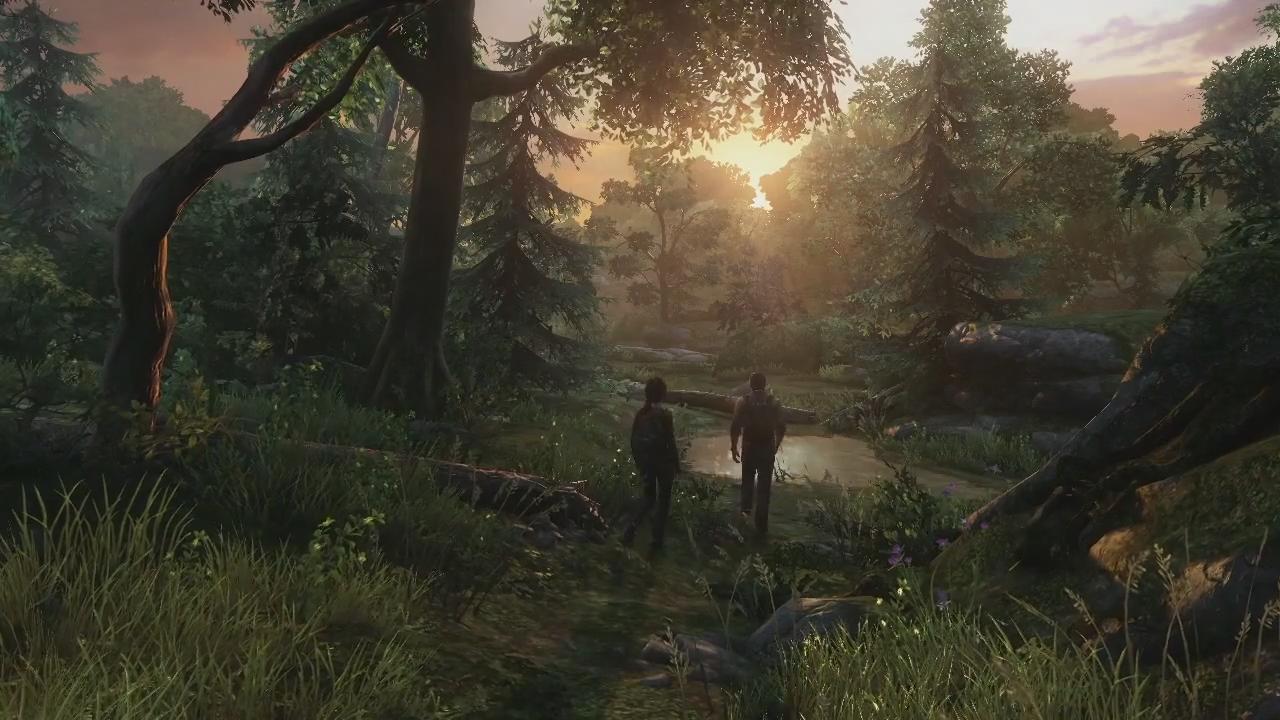
For the essay "The Romantic Dead," the thesis is "TellTale's The Walking Dead and Naughty Dog's The Last of Us are both neo-romantic pieces that update the ideals of romanticism to the post-industrial state."

2. Preliminary exploration
I've done plenty on both these fronts. My personal gaming blog has several posts I've already written that link literature and videogames. I read and reviewed Ian Bogost's book How to Do Things With Videogames. I've also curated a lot of content on the debate over videogames as art here.

3. Relevance
To digital culture: Many lament the rise of digital culture as a kind of death of civilization and great art, but this project seeks to prove otherwise, and instead show how digitally native mediums only enhance art and are just another step forward.

To a specific audience: I'm hoping the e-book will serve as a kind of primer for humanities students and teachers trying to bring this new form of expression into their classrooms and studies. Also, I feel like serious gamers--especially those who have played the game I write about--will be very interested in these essays just as a way to get them deeper into the worlds of the games they play.

4. Format
Like I said before, I'll have two formats here: one will be a more formal research paper (that could easily be a guest blog post as well) and the other will be an e-book that I'll also have available in PDF format (I have to typeset a book for a print publishing class I'm taking, so I might as well just do this, right?).

5. Outlet
There are several outlets I'm looking at for both sides of this project.

I really want to submit one or two of the essays to the BYU English Symposium to get these discussions going in the BYU community, but there are other venues I'm exploring as well.

I've been eyeing the online journal Game Studies for awhile, and think "The Romantic Dead" might be a good fit for it. I also like the website First Person Scholar, and though their call for papers says they focus on graduate students, I still think my work could get accepted there. Finally, the RE: Humanities conference is specifically asking for writing about games, so it could be a venue that is eager to accept my work.

6. Curation
Content for analysis: see the pictures and links in my posts here and here.

Secondary texts:

Community:
  • Greg recently showed me the Google+ community World of Video Game where he shared a video from one of my posts that currently has 94 +1's.
  • Subreddits /r/gaming, /r/truegaming, and /r/games are all reddit communities interested in games and game thinking
  • Video Games is another Google+ community that's very active and encourages a lot of discussion
7. Social Proof
I've worked a lot with both +Greg Bayles and +Gideon Burton already discussing these ideas, and both have reacted positively and encouraged me to move forward. I received a lot of positive feedback when I presented my paper from last semester on Shakespeare and videogames at RMMLA, which encouraged me to keep writing about the connection between literature and videogames. In an information session with the faculty of the MIT graduate program in Comparative Media Studies Writing, the director of the MIT Game Lab, Philip Tan said my research works in perfectly with their program and what's going on in game studies right now.

To be honest, I still feel like I haven't found the community that I know is out there talking about games like I do, but I've found a lot of good people and continue to search all over for like-minded people.

8. Next steps
I have lots of content already, so next steps for me are to figure out the best way to collect these essays into an e-book and how best to distribute that, as well as study the specific submission guidelines for each venue and adapt my work for each of them. I'll also continue searching for communities and venues, just to make sure I get the widest interested audience possible.


Journey and the Epic

Here's another re-post from my personal gaming blog that I'll probably work into my final project.

Journey, developed by thatgamecompany as part of a partnership with Sony, is one of my favorite games ever made. Despite being short, simple, minimalist, and offering virtually no challenge, it has had the biggest impact on me of any game I've ever played, and I'm hardly the only person to say things like that. Among the many reasons already given for why Journey is so great, I'd like to add a new one: Journey is actually the simplest, most universal epic poem ever written.

Tuesday, November 19, 2013

The Romantic Dead

The following is a post from my personal gaming blog, Complicate the Narrative. I'm putting it here because it might work into my final project.


I wrote a little bit last week about my experience with TellTale's The Walking Dead and the rise of what I've come to call "film-games." In that post, I also talked about The Last of Us, another of my favorite games of all time. The two games share a surprising amount of similarities (while feeling like entirely different games), but one that particularly catches my attention is that both could are works of Neo-Romanticism.

(*Sigh* I guess I'm morally obligated to tell you, I will be "spoiling" these games, to the extent that the enjoyment of art really depends on the revelations of its plot.)

Monday, November 18, 2013

Breaking Down the Video Game: Resources for Reading Video Games

Are video games art? Can we look at them as 'literary' works?
What critical theories aid in understanding and distilling
meaning from video games? How can we 'read' video games?
Hopefully these resources will help to answer some of these
questions!
I've been really fascinated by +Paul Bills's research on video games, so I decided to take a few minutes to contribute some resources for his study of video game "literacy." Paul has been working on a book proposal for a work on how to "read" video games from a critical persthe medium of the 21st century, so I'm excited to see people like Paul engaging in formal analysis of games. They will, no doubt, play an integral role in the future of media studies, and realistically, they are on track to become one of the most powerful tools for audience engagement and social change.

I started off by doing a search for "reading video games," and that didn't turn up much of anything useful (mostly just a bunch of pseudo-games that teach reading). I then decided to try searching for "critical analysis of video games," and this turned up some really great material. I've divided into three categories: courses/syllabi, books, and miscellaneous (though still valuable) resources.