Showing posts with label meaning. Show all posts

Tuesday, November 12, 2013

Comparing Moby Dick to Pinterest

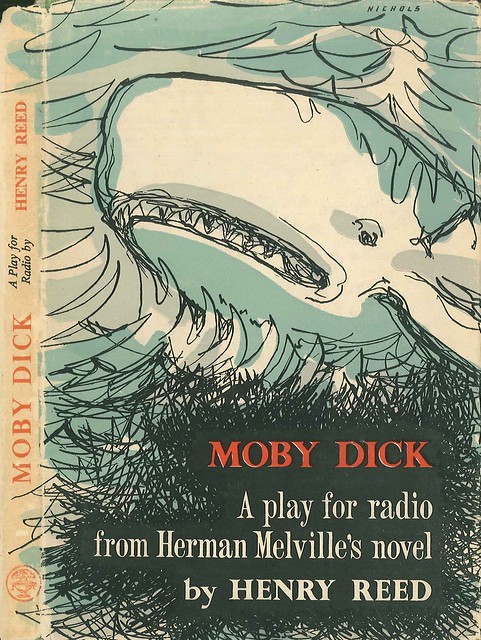
Courtesy of Reeding Lessons from flickr.com
It states in the introduction of Moby Dick, "Melville himself certainly believed that all men are united by the bond of reciprocal dependence, by a community of function and responsibility" (xv). There are the following parts: etymology, extracts, prose, lists, histories, biographies, plays, epics, etc. This is a community working together to present meaning. We've talked about it how it's is one genre, but not really because it's another genre as well. It can't really be identified as ONE genre: It's a compilation of all of its genres and that's where the significance is found.

Pinterest is arguably the same way. If we were only to identify pinners by one pin, one thing that they felt best encompassed who they are, it wouldn't work because it is more complicated than that. They can't be identified by one outfit or one recipe. Instead they are identified by ALL of the pins together.

Wednesday, October 23, 2013

Meaning in Video Games: Ian Bogost's How to Do Things With Videogames

I'm interested in establishing some ground work for talking about and exploring the ways video games create meaning. Ian Bogost is someone who's been on my radar for awhile but I haven't yet taken the time to dig into his work. This will be a good opportunity to expand on my knowledge and explore new ideas.

Preview:
After an initial view of the first couple pages of the intro and the about the author section, I found some interesting stuff in the back. For one, this book comes from a series called "Electronic Mediations," and the rest of the books of the series are listed in the back, and they all sound amazing. Also, rather than just a list of sources, he has a separate, multi-page "Gameography." It looks like this book is exactly the kind of stuff I've been looking for.

Early social proof:
No one responded on Google+ or Twitter, but I've been talking with my wife for the past couple days about making meaning in video games, and pretty quickly she's gotten on board. She helped me come up with a game idea about a Dad reading stories to his son at night and the player taking over as the dad as the hero of each bedtime story. I can tell there's a lot of potential in this topic and it's easy to get people excited about it.

Similar Books:
Apart from Bogost's other books, some titles that seem to always pop up alongside this one are Jane McGonigal's Reality is Broken, which I've already read and enjoyed, but also some other titles that intrigue me, such as What Video Games Have to Teach Us About Learning and Literacy by James Paul Gee, which I noticed is also on our class's Goodreads bookshelf, as well as Tom Bissell's Extra Lives: Why Video Games Matter. The rest of the books in the "Electronic Mediations" series also probably have a lot in common.

Monday, October 7, 2013

Midterm 1: I'll Do This

In the non-narrative chapters of Moby Dick, Melville's essentially pulling in the reader further into the world of whaling, building connections that will increase the power of the plot in the reader's heart and mind. By relating everyday objects to large philosophical questions and symbols, Melville builds a collage of meaning over the final scenes of man versus whale in the novel. Through Melville's connective efforts, by the end of the novel we're not just watching a one-legged man chase a white whale, we're watching Satan tempt Jesus, and the world turn more secular, and Peter deny Christ, and America be forged, and several other metaphorical and allegorical applications Melville has built into the story--and infinitely more that he did not build in, but which we can build over the structure he has laid before us.

I want to study in my paper how meaning is established in Moby Dick, and in what ways these techniques can be used to create meaning in the new digital form of video games. I also want to explore how video games can't follow Moby Dick's example, and what video games can do to create meaning that a book could not.

We're very good at finding meaning in books, and pretty good at finding it in movies, because these forms have been around awhile and we have learned how to "read" them for meaning. We don't know how to "read" video games for meaning. Many would argue that this is because video games simply don't have meaning, but I don't believe that for a second. Every English major can attest to having defended a novel as meaningful when someone told them it really "didn't mean anything." I believe this is the same situation. It is true that games have only recently had the economic stability to consider more traditionally artistic themes and tropes--but at the same time, early games might be even more meaningful because they were made despite all the economic difficulty, meaning the creators really had something they wanted to accomplish with it enough to make it happen despite the difficulty.

So, here's a go at a working thesis statement:

Moby Dick is an excellent case study in how novels can create meaning through connecting with readers personally and with larger human themes and ideas. Using this case study, I argue that video games can create meaning in many of the same ways as novels (and in many ways unique to the medium). The only reason we do not find as much meaning in video games as we do in novels is because we have not learned how to find and understanding the meanings games could produce.

Please comment below if you have any questions or insights you think I should consider. Also, if you are on reddit, you can join a similar discussion I started over there.

Thanks!

Midterm 1: I Did This

So far, I've made the following posts in our Digital Culture class:


One theme I see running through all my posts and that I've found some interest in is how digital culture changes the way we make meaning in our lives, and how digital meaning can best create meaning, specifically video games. We talked a lot in class about the "extra" chapters in Moby Dick, and how they add to the meaning of the overall work. Greg talked about how Moby Dick builds both the whale and Ahab into symbols of God and Satan, respectively, exploring another aspect of how meaning is created. I'm interested in the ways digital media--and especially a variety of digital media together--can create new kinds of meaning and more intense, emotionally connected meaning. This idea gets especially interesting as digital media is often in flux--not entirely finished and often iterated and revised, as Dr. Burton talks about in his post on the spiral. Digital media, then, is an interesting blend of authorial intent and influence and a larger relationship between the author(s) and their initial audience, thus blurring that traditional binary as well. Thus, the future of digital media criticism and studies will have to draw not only on traditional literary criticism, but sociology and organizational behavior theories to truly understand the meaning created by a single digital experience. This makes digital media potentially much more powerful, but at the same time much more difficult to manage and control, such that it makes authorial touches fade in the background or lose their footing in the mass of iteration and outside input. Thus, my research question is how can authorial control be exercised over the new digital media--and even across several media simultaneously--to harness the potential of digital media forms to create more powerful meaning both inside the work and outside the work in the reader and world at large?

Thursday, September 26, 2013

Fast-Fish and Loose-Fish 2: Digital Fish Edition

On Monday, I talked about Chapter 89 of Moby Dick and the concept of Fast-fish and Loose-fish and how it ultimately serves as a foundation for the creation of meaning within the novel. Today, I want to extend on ideas I started there by applying the concept of Fast-fish and Loose-fish to a wider view of our entire digital age.

To review, I basically argued that all meaning in life--both in art and outside of it--is the product of connection. (Indeed, the more I think about it, I can't really tell a difference between connection and meaning, and it seems the two are almost interchangeable.) If this is all true, then, ultimately, this idea is another key to how the digital age changes everything. New technologies give us different powers of connection, and thus the powers to alter the meaning of nearly everything in our lives.

As digital media gives fans more chances to connect with fictional universes,
it makes these universes more meaningful for them.
Digital communication changes the meaning of our lives because it changes the connections in our lives. That sounds big and daunting and somewhat terrible, but it's true in both superficial and profound ways, and isn't necessarily a bad thing. For one, the internet has given rise to millions of meaningful and valuable relationships that wouldn't have ever been possible before. Perhaps where this is most easily seen is the rise of fandoms, or more specifically what I'll just call "Comic Con culture." As Kylee pointed out in her post on the subject, Comic Con is a physical gathering of enormous numbers of fans of several similar but quite distinct fictional universes. Ironically, such conventions have grown as internet technology has become more ubiquitous and powerful. You'd think with more possible digital connection, you wouldn't need to physically gather in one place, but I would argue that Comic Con culture is on the rise because these people spend so much time reading/discussing/watching/playing online with each other that they create real relationships around these fictions, and those relationships climax in a confidence and understanding that can only come with community, leading to more and more people identifying with the community enough to physically attend a convention.

Monday, September 23, 2013

God in the Whale

A classmate of mine, Shelly, wrote "I believe that Moby Dick does in fact represent God and Ahab's search for him is not for religion or mercy, but to avenge his misfortune - the bad things that have happened to him, such as losing his leg." This is an astute observation, I think, and warrants further investigation. As I've been reading through what at first seemed to be unrelated passages about the physiology and anatomy of whales, I've been thinking about how it all ties into a broader, more general idea, and I've come to the same conclusion as Shelly: that the whale is, in many ways, meant to represent God.

By EIMJ from deviantART
This point becomes clearer, I think, with each chapter. In Ch. 68, he is described as "the mystic-marked whale" (276) covered in "undecipherable" hieroglyphs (lit. holy writings), and in Ch. 71, Gabriel, the crazed 'prophet' declares the White Whale to be "the Shaker God incarnated" (284). In Ch. 80, Ishmael comments that sperm whales cause one to "feel the Deity and the dread powers more forcibly than in beholding any other object in living nature, and Ch. 82 paints the whale as an alternate incarnation of the Hindu god Vishnu. These are just a few of the many references that place the whale within a context of deity.

Fast-fish and Loose-Fish

Chapter 89 of Moby Dick ends with these words:

"What is the great globe itself but a Loose-Fish? And what are you, reader, but a Loose-Fish and a Fast-Fish, too?"

Nothing better summarizes Melville's game (and, ultimately, our whole digital culture, but that will be my other post this week) than these words. Dr. Wickman's lecture on the non-narrative chapters today focused  a lot on how Melville took boring subjects in these "extra" chapters and linked them to universal ideas. As I listened, I became more and more certain that in any aspect of humanity, meaning comes from connection. Whether it be personal relationships, literature, work, or anything else, the meaning--in both the sense of definition and of significance--comes from the connection established.

This is the key to Moby Dick, and the principle upon which Melville based his whole art.