Showing posts with label posted by Paul. Show all posts

Wednesday, December 18, 2013

Final Exam Essay 2: English Major Update

Updating the English Major to the digital age could be advantageous to professors, students, and the broader academic community in several ways and could keep the major relevant in a world that increasingly questions its importance. One such way to update the major to the digital world would be reshaping the course outcomes to always include a project that somehow extends beyond the classroom into the broader world and enter the real-world conversations happening on that topic, rather than just live and die in the classroom. We've studied ways to do this in our digital culture class this semester, both discussing ways to socially optimize our research to both prove its relevance and find communities interested in it and ways to reach beyond the classroom with our research. Ideally, students would have the flexibility to follow their own research topics and trends from class to class, building over the course of their college career a portfolio of work as well as an individual voice, style, and research expertise.

Such an approach would actually be closer to the original spirit of university study, to come and follow a specific passion and study it out over a long period of time, building skills and talent through mentoring and professorial guidance to prepare to go out into the world and show a new and unique idea. Ironically, updating to the digital age would in this way also be a return to the roots of higher education. Such a system would allow students to leave their university not only with a degree, but with a reputation and a direction for further study and work that would lead more naturally into graduate study and/or the workplace.

Increasingly, the digital world requires students to have not only degrees, but portfolios to enter the work field. Graduate schools also always require a writing sample and a clear sense of research direction from a student to be considered for admission. The current model doesn’t allow much time or room for students to build such a unique voice and direction in their research. By updating the English major for the digital world, we can allow students to not only build such a voice and direction, but also build connections, communities, and networks by way of publication and sharing of their ongoing research such that by the time students graduate, they already have in place everything they need not only to apply to graduate school or the workplace, but to continue to succeed there as they have a wide network and body of work to pull from and build on.

Currently, such a model isn’t followed because the focus of undergraduate study is to expose students to a broad range of literary genres, periods, and works. This ideal is not wrong, and could still be preserved in the proposed update to the English major. For instance, I have gone through my college education according to the traditional English major, taking classes from a broad range of time periods and genres to fulfill the major requirements for graduation. However, over the past school year, I have also pursued research relating videogames to literature, and have been able to apply every one of my classes to such a study. In Early American Literature, for example, I studied how Edgar Huntly set up many expectations for the American novel that have persisted into American videogame story tropes, specifically the Assassin’s Creed series. In Advanced Studies in Genre, my section was focused on the rise of the British detective novel, and I was able to explore not only film adaptations of Sherlock Holmes, but videogame adaptations as well, and deal with the issues of a videogame trying to make the player feel like a detective as intelligent as Sherlock Holmes. In a Shakespeare class, I was able to explore how Shakespeare legitimized English language drama as a high form of art and relate that to possible ways videogames could become a culturally legitimate art form in our own time.

As I began to follow this single strain of research in all of my classes, I opened opportunities that I hadn’t even considered before for myself. I ended up presenting alongside a Ph.D. candidate and an established professor at the annual conference of the Rocky Mountain Modern Language Association, and scarcely two months later had three offers for publication on three separate articles I had written in the vein of videogames as literature. I started my own blog to get more of my thoughts out there, and within a month of starting it had over a thousand page views and several comments that led me to people interested in similar topics that I could connect with. Also within a year, I had connected with some big names in the field by keeping to socially optimized research methods and had personal feedback from major writers and creators that have lent intelligence and credibility to my research. My prospects for graduate school and a career have increased considerably as a result.


This kind of path through the English Major should not only be more accepted, but encouraged as it is the best way to ensure that students land on their feet after graduation and have a clear direction with their education. Without such an update, the English major faces increasing obscurity and ridicule from the world at large. The world has moved into a new age; the English major must go there with it.

Final Exam 1: Moby Dick in the Digital Age

Moby Dick helps us understand digital culture because it deals with a vast array of themes that have only become more pertinent and important in the digital age. One such theme is that of fixation. In the digital age, it’s easier than ever to get wrapped up in just one interest as it is easier than ever to find massive amounts of content on that topic. This has caused problems in several ways, perhaps most prominently with videogame addiction, fandoms, and social media and other forms of digital communication that take a lot of time and energy to keep up with. 

Moby Dick teaches us of the dangers of obsessive fixation, but also explores the psychology of it in realistic ways that could help us understand the mindset of those who become too fixated on the digital world and begin to neglect the real world. Also, it helps to show the merits of fixation as well that can easily go overlooked. For instance, Ahab was certainly crazed, but he also created a strong sense of community and brought different kinds of people together for a single cause. Obviously, Ahab’s methods and reasons were wrong, but that doesn’t mean that passionate interest can’t also lead to a strong sense of community among a diverse group of people. Moby Dick shows both sides of this coin, and both obsessive fixation and healthy passion have only become more important in the digital age as new technologies provide greater connectivity and greater access to content and people than ever before, raising both opportunity and danger. 

Literature and art have always instructed humanity on how to live, and Moby Dick proves that they will continue to do so in important and powerful ways that expand people’s perspectives and open their minds to the broader world around them. In some ways, you might say that Moby Dick is more important in the digital age than ever before, and its study has only become more important. Moby Dick can and should be applied to aspects of digital culture whenever it is taught.

Tuesday, December 17, 2013

Final Reflections: "How I Have Come to Understand Digital Culture"

I came into this class knowing a good amount about digital culture already. I had taken a course from Dr. Burton before in which he emphasized academic blogging and using social networks for social discovery and social proof. I had already been researching and writing about videogames as art and literature for a while. However, what I really took away from this class is a view of the truly digital world we’re now living in. That world is open, complex, beautiful, even though in many ways not exactly new.

The new digital world I saw through this class is open in more ways than I thought. It’s open access, open opportunity, and largely open-armed. I learned a ton about copyright law and the complex issues of fair use and creative commons that I hadn’t understood before as I saw just how much information really is entirely open and free to be accessed through the internet, and how much creative content is being made open source for anyone to use and add to or adjust (the Linux operating system, for example, or Wikipedia). Our lectures on crowdsourcing were especially eye-opening to me because I hadn’t understood just how complex, powerful, and beautiful projects done asynchronously by people from all over the world could turn out to be, like Eric Whitacare's virtual choir. I saw also a wider range of opportunity provided by the internet as we talked about the do-it-yourself movement and maker culture, as well as e-publishing, social networks, and tinkering. This especially hit home to me in the video we watched of a homemade space craft. I also saw how open-armed the digital culture really can be as we talked about all the different opportunities to share undergraduate research, and how communities can and have formed around almost any topic somewhere on the Internet. I especially felt these three aspects of digital culture—open access, open opportunity, and open-armed—as I started my own blog to collect my thoughts on videogames and ultimately published with one blog and am now in the works with two others. In gathering resources to put in my writing, in collecting and forming my own thoughts, and in working with other people through the internet to get my ideas out there and receiving feedback, I have seen digital culture at work in all three of these meanings of the word “open.”

Two students who have especially helped me take my understanding of digital culture even further as I’ve gone throughout this course are, unsurprisingly, the other two students in my blogging group, Greg Bayles and Aleesha Bass. Greg showed me how the three meanings of open in the digital world can become the foundations for an entirely new kind of civilization—how real human organizations can exist entirely within the digital world, and how most physical organizations are becoming increasingly digital as well. Aleesha helped me see how our digital activity reflects our true identity in a clearer way than I ever had before. As I went through the course, I understood more about how our online actions express our identity, but as Aleesha looked specifically at Pinterest and we talked about it together, even concluding that one could tell the personality and major life events of a person based on their Pinterest boards alone, something clicked in my brain and I saw just how our digital selves connect to our real selves in a clearer way than I ever had before.

I’ve truly seen a whole new world throughout the course of this class. Even though our readings of Moby Dick have proven that the concepts, issues, and foundational ideas of the digital world certainly aren’t new, new technologies are allowing us to take those ideas and concepts and deal with those issues in bigger, faster, and deeper ways than we ever have before. It truly is a brave new—digital—world.

Wednesday, December 11, 2013

UPDATED: (TWO of my) Final Product(s)

Like I said in my last post, my final project has kind of broken into many different pieces, but I made good on the promise from my proposal and made a little ebook of my essays on games and literature, which you can find here. It's in epub format, which most e-readers, tablets, and smartphones should support with the right app, or you can read it on the web through Firefox or Chrome with the right add-on/extension. A good Chrome e-reader add-on I found is Readium.

Also, I can't post my paper on the classical unities in videogames online because it's going to be published at First-Person Scholar, but here's a link to a doc of it.

If e-readers aren't your thing, all of the essays are also available (along with some other stuff I've written on games) at my personal gaming blog, Complicate the Narrative.

Thanks for reading! Enjoy!

Tuesday, December 10, 2013

One Success, Two More Potentials

So my final project has fractured into many different things all at once, but I've submitted three different articles/essays to three different people, and they've now all responded.

First of all, the gaming blog/game blogging aggregator Critical Distance accepted and featured my piece "The Romantic Dead" in their feature "This Week In Videogame Blogging" for this week (week of December 8). That's a big deal because it puts my name right next to a lot of the biggest in the business of videogame writing right now (and it's given a healthy spike to my blog views for the past couple days, too).

Next, Dr. Olvier Turle, founder of the literature blog Interesting Literature and now writer at the Huffington Post, liked my post "Journey and the Epic" and has said he wants to feature it as a guest blog piece in the near future, but it busy right now and will get back to me in a couple weeks.

Finally, the guys over at First Person Scholar liked my "Romantic Dead" piece, but said they don't host things already hosted somewhere else (even my personal blog), so I wrote a new piece entitled "All in One: Open World Games and the Classical Unities" that I've sent to them and they said they'd like to feature it, I just needed some revisions and a few more references. So I'm hard at work on that.

Anyway, so far at least that's 3 for 3, as long as those last two work out. This is amazing results and I'm so excited to see where this goes.

Monday, December 2, 2013

I Got a Little Eager

So Greg just sent me a link to this great post at Interesting Literature, an academic blog focusing on a wide range of literary topics. I saw that my recent post on my gaming blog, "Journey and the Epic" spoke a lot to that guest post, so I just went for it and submitted that to them as a possible guest post.

Then I figured while I was at it, I should just submit my other post, "The Romantic Dead" to another academic blog I've been looking at, First Person Scholar. So I did.

Over the Thanksgiving break, I put both of those posts into a word document and discovered the were both already in the 8 page range, and I was worried about how I could translate them into regular papers from a blog format (especially "The Romantic Dead," since I depend on pictures a lot in that one) so I decided submitting to academic blogs was a good idea so I could preserve the original format. Also, I figured academic blogs would be a good idea because they generally get back to you faster and publish quicker, and I'm trying to gather as much clout as possible for my graduate school applications that'll be going out early next year. Since I don't know where I'll be or what I'll be doing in the Fall, I decided against a conference submission, especially since I just did a conference and wanted to try something new.

So that was quick, but quite a rush. We'll see what they say and I'll let you all know how it goes.

Saturday, November 30, 2013

Final Project Proposal: Complicate the Narrative/"The Romantic Dead"

1. Working Thesis Statement
My project is twofold: I want to produce a short e-book with several essays connecting videogames and literary traditions and thinking, and I want to submit one of those essays, "The Romantic Dead," for publication somewhere.

For the e-book, the purpose is basically "Videogames are a new medium, but they speak to the artistic traditions of the mediums that preceded them and expand on themes and ideas of the past in new ways native to this new interactive medium, and this book shows several ways in which that is true."

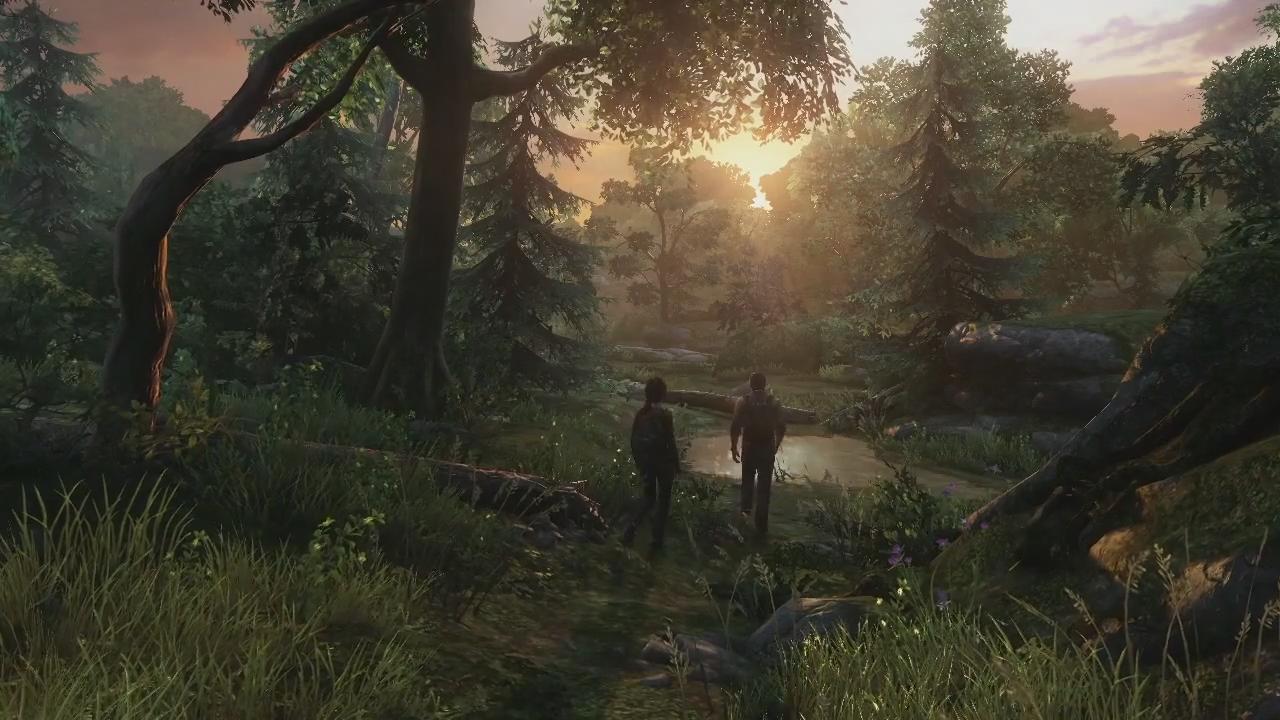
For the essay "The Romantic Dead," the thesis is "TellTale's The Walking Dead and Naughty Dog's The Last of Us are both neo-romantic pieces that update the ideals of romanticism to the post-industrial state."

2. Preliminary exploration
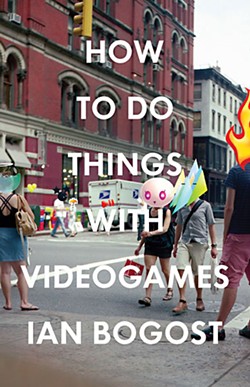
I've done plenty on both these fronts. My personal gaming blog has several posts I've already written that link literature and videogames. I read and reviewed Ian Bogost's book How to Do Things With Videogames. I've also curated a lot of content on the debate over videogames as art here.

3. Relevance
To digital culture: Many lament the rise of digital culture as a kind of death of civilization and great art, but this project seeks to prove otherwise, and instead show how digitally native mediums only enhance art and are just another step forward.

To a specific audience: I'm hoping the e-book will serve as a kind of primer for humanities students and teachers trying to bring this new form of expression into their classrooms and studies. Also, I feel like serious gamers--especially those who have played the game I write about--will be very interested in these essays just as a way to get them deeper into the worlds of the games they play.

4. Format
Like I said before, I'll have two formats here: one will be a more formal research paper (that could easily be a guest blog post as well) and the other will be an e-book that I'll also have available in PDF format (I have to typeset a book for a print publishing class I'm taking, so I might as well just do this, right?).

5. Outlet
There are several outlets I'm looking at for both sides of this project.

I really want to submit one or two of the essays to the BYU English Symposium to get these discussions going in the BYU community, but there are other venues I'm exploring as well.

I've been eyeing the online journal Game Studies for awhile, and think "The Romantic Dead" might be a good fit for it. I also like the website First Person Scholar, and though their call for papers says they focus on graduate students, I still think my work could get accepted there. Finally, the RE: Humanities conference is specifically asking for writing about games, so it could be a venue that is eager to accept my work.

6. Curation
Content for analysis: see the pictures and links in my posts here and here.

Secondary texts:

Community:
  • Greg recently showed me the Google+ community World of Video Game where he shared a video from one of my posts that currently has 94 +1's.
  • Subreddits /r/gaming, /r/truegaming, and /r/games are all reddit communities interested in games and game thinking
  • Video Games is another Google+ community that's very active and encourages a lot of discussion
7. Social Proof
I've worked a lot with both +Greg Bayles and +Gideon Burton already discussing these ideas, and both have reacted positively and encouraged me to move forward. I received a lot of positive feedback when I presented my paper from last semester on Shakespeare and videogames at RMMLA, which encouraged me to keep writing about the connection between literature and videogames. In an information session with the faculty of the MIT graduate program in Comparative Media Studies Writing, the director of the MIT Game Lab, Philip Tan said my research works in perfectly with their program and what's going on in game studies right now.

To be honest, I still feel like I haven't found the community that I know is out there talking about games like I do, but I've found a lot of good people and continue to search all over for like-minded people.

8. Next steps
I have lots of content already, so next steps for me are to figure out the best way to collect these essays into an e-book and how best to distribute that, as well as study the specific submission guidelines for each venue and adapt my work for each of them. I'll also continue searching for communities and venues, just to make sure I get the widest interested audience possible.


Journey and the Epic

Here's another re-post from my personal gaming blog that I'll probably work into my final project.

Journey, developed by thatgamecompany as part of a partnership with Sony, is one of my favorite games ever made. Despite being short, simple, minimalist, and offering virtually no challenge, it has had the biggest impact on me of any game I've ever played, and I'm hardly the only person to say things like that. Among the many reasons already given for why Journey is so great, I'd like to add a new one: Journey is actually the simplest, most universal epic poem ever written.

Tuesday, November 19, 2013

The Romantic Dead

The following is a post from my personal gaming blog, Complicate the Narrative. I'm putting it here because it might work into my final project.


I wrote a little bit last week about my experience with TellTale's The Walking Dead and the rise of what I've come to call "film-games." In that post, I also talked about The Last of Us, another of my favorite games of all time. The two games share a surprising amount of similarities (while feeling like entirely different games), but one that particularly catches my attention is that both could are works of Neo-Romanticism.

(*Sigh* I guess I'm morally obligated to tell you, I will be "spoiling" these games, to the extent that the enjoyment of art really depends on the revelations of its plot.)

Two Can Play at This Game

After Greg rained info on me like mana from heaven, I've taken it as a personal challenge to respond in kind. Here we go, +Greg Bayles. Have some stuff on digital civilizations/nations and virtual worlds.

Digital Nations:

This article is a chapter from this book that deals more with privacy, but also suggests that Facebook deserves a constitution, especially since David Cameron (Prime Minister of the UK) met with Mark Zuckerberg as if he were a head of state.

This is a reddit user's attempt to make a whole constitution for the "Digital Nation."

Virtual Worlds:

This image is from Gary's Mod which I found from this reddit thread where a lot of users talk about how they've "lived" inside the game. In addition to going to a bar to watch professional gamers play another game from inside the game, people have read the entire Lord of the Rings series, watched whole movies, and more.

This article is about the upcoming EverQuest Next, a game which is actually two games presented in two phases. The first phase is EverQuest Next Landmark, where players will be free to establish towns, settlements, cities, etc. to establish the world, then when that phase is done and enough of the world is built, they'll start the real MMORPG of fighting and stuff, but you can still build things too.

Thursday, November 14, 2013

Moby Dick, Democracy, Participatory Culture, and Games


"Call me Ishmael," Moby Dick begins, establishing the identity of our narrator for us and giving us an introduction to his character and particular voice as he will be telling us this story for quite a while and we should be comfortable with him. Moby Dick is a book full of strong characters--Queequeg, Ahab, Flask, Starbuck, Stubb--each of these character seem particularly individual and powerful in their own right, just as we feel we "get to know" Ishmael, we can "get to know" the other characters and understand their desires and quirks. However, the story isn't about any one of them, its about (and exists because of) all of them combined.

Not only does Melville craft each of these characters expertly to allow each of them their own voice and personality, but the very form of Moby Dick is broken up into distinctive "voices" of different literary genres. Interrupting Ishmael's regular narrative come dramatic monologues (ch. 37), encyclopedic articles (ch. 32), affidavits (ch. 45), as well as histories, articles, and more. Indeed, Moby Dick is designed on a formal as well as a textual level to break up any overpowering voice. In fact, freedom of speech and choice may arguably be what Moby Dick most values, as the ultimate tragedy of its ending comes from Ahab drowning out everyone else with his power and desire.

This evidence proves Moby Dick's quality as a distinctly American epic. But it wasn't popular until the early 20th century, and many scholars have classified Moby Dick as a modernist work. This makes sense because modernism, the term given to much of the literature of the early 20th century before World War II, emphasized the same points and values of expression, experimentation, and the power of the individual. It was a time when listening to single voices was more and more dangerous, as well as more and more outdated as the United States, the ensign of democracy to the world, was rising to become its greatest super-power, thus proving to the world that what started as an "experiment" of democracy was paying off, and Americans were certainly not quite in pointing this out to world.

As I've explained elsewhere, the influence of the rise of democracy and American in the late 20th century is easily seen stamped all over the internet. Thus, soon after its inception, the internet evolved from just a repository of information to a tool of individual expression, a shift commonly referred to by scholars as Web 2.0. Democracy is so stamped into the mindset of the world that it is more a social than a political principle in our own time, and we feel it is our right to be able to express ourselves and give our opinion. This simple shift in thought might be the single biggest marker of the modern human being to that of earlier ages: we seem to think we all matter. Thus, authority becomes more and more complicated in the modern world, and this aversion goes deeper than we sometimes think.

When we receive any information today, we expect to be given the opportunity to interact with it and not just receive it. This is viewed as a fundamental right, thus the proliferation of comments sections on nearly every website around. Social media lets us not only express our opinion about anything we care to comment on, but provides tools to make sure other people know that opinion by way of hashtags and hyperlinks. Our world is increasingly built to make sure we are allowed to express ourselves about anything, anytime, anywhere, publicly.

Thus, it should come as no surprise to anyone that the fastest-growing and most innovative medium of expression today is videogames. Neither should anyone be surprised that so many of the current generation want to go to this medium to have cultural experiences and explore a variety of perspectives on life and important moral and philosophical debates. Videogames are increasingly growing in intellectual capital because they are the medium that best represents the values of contemporary communication and expression, where the audience is not only encouraged but by definition expected and needed for the piece to unfold. In a world where talking back is a right, a medium that lets the audience feel like they are doing the talking in the first place is the ultimate concession to that right. Videogames are Artistic Expression 2.0, expression that allows creators to still have strong sense of authorship, but for audiences to feel they are just as important as the creator, and even creating their own experience.

So, really, videogames as a culturally legitimate medium is not only eminent, but inevitable. You can join the conversation, or you can ignore it, and regret it 30 years from now when the majority of the world's most important cultural conversations are happening inside and around videogames, and you find yourself with a lot of catching up to do.

Monday, November 11, 2013

Preliminary Book Outline for "How to Read a Videogame"

I've been working with Dr. Burton to flesh out an official book proposal for a publisher as my final project for the class. Below is my preliminary outline. The ideal audience I'm going for is people who already think critically about other mediums and want to learn how to apply those techniques to videogames. I'd love any feedback!

Introduction: Reading Games

  • Changing state of games
  • Games are getting more relevant, complex, and ubiquitous
  • Games are the art for us--our time and our world

You don't read games, you play them, but reading means more than gathering information from words, it means gleaning meaning and information through a critical eye. How to Read a Videogame will be an overview of how to "read" games in the latter sense, going beyond playing to pondering and understanding.
Section One: Learning from Literature, Film, and other mediums

  • Acting
  • Lighting
  • Framing
  • Dialogue
  • Symbolism and Metaphor
  • Themes
  • Social Commentary

Section Two: Reading Genre

  • Intro to game genres
  • FPS, RTS, MOBA (ARTS), Action/Adventure, Open-world, Story-driven, Puzzle, etc.
  • How genre determines mechanics
  • How mechanics make meaning

Section Three: Reading outside genre: "Points of intersection"
Games are about interaction, and meaning comes from when and how different parts of the game interact. Starting from the point of the player, I'll go step by step down the rabbit hole into the game, looking at each layer of interaction and how those interactions create meaning.

  • Player to Game System (rules, goals, etc.)
  • Player to Player Character(s)
  • Effect of Controls
  • Player Character to environment
  • NPC to Player Character(s)
  • Non-player Character (NPC) to NPC
  • NPC to environment

Conclusion: Looking Forward to "the Ludic century"

  • Games literacy will only be more essential in the future

The cultural contributions the 21st century will be remembered for won't be films or books (those are the last two centuries' mediums), this century will be remembered for its games.

Saturday, November 9, 2013

Some of My Favorite Poems On Video

Dr. Burton's post we read for class on video poems inspired me to make a quick collection of a few of my favorite video poems. Here they are!


Taylor Mali is an English teacher and an amazing slam poet. This particular poem is just awesome. There's also a kinetic typography version of the same poem here.


This one caused a lot of buzz on the internet recently, and is interesting both as a poem and a study of the problems (and performance) of OCD.


This one is interesting to me because it's a poem reacting to cartoons turned back into a cartoon.


I love Billy Collins, and this animated version of his poem "The Country" is especially good.

I've actually also made a Facebook group for discussing poetry in contemporary society. You can check it out (and even join if you want!) here.

Monday, November 4, 2013

How to Do Things With Videogames by Ian Bogost

See my review on Goodreads here.

How to Do Things With Videogames might not be the book you're expecting it to be. It's not a game design book that discusses technical solutions, neither is it a book of videogame criticism focused on the effectiveness of individual titles. Rather, it's an eye-opener book meant to show anyone and everyone what has been done with videogames so far in their relatively short history. Indeed, a better title for this book might be How Things Have Been Done With Videogames. As such, it reads more like a highlight reel of Bogost's blog posts on videogames than a single argument that unfolds from chapter to chapter.

Once you understand that purpose of this book, it's easy to see how well that purpose is fulfilled. The examples Bogost provides are varied and plentiful, allowing any curious reader to use the chapter on their topic(s) of choice as a starting point for a deeper study in a specific use of videogames. Rather than settling into the common and heated debate of "videogames as art," Bogost addresses that as simply one use for the medium in this book's first chapter, then moves on to much more varied and surprising uses for videogames, from empathy and kitsch to reverence and exercise.

While the individual chapters do not linearly unfold a single argument, Bogost frames the collection as evidence for one major point he wishes to make. He states this point explicitly in the introduction and conclusion: "We can understand the relevance of a medium by looking at the variety of things it does." The collection of essays that follows this introduction proves this point, which in turn is used to argue his final point in the conclusion: "Soon gamers will be the anomaly. If we're very fortunate, they'll disappear altogether. Instead we'll just find people of all sorts. And sometimes those people will play videogames. And it won't be a big deal, at all."

It may seem contradictory to write a book about videogames just to suggest that the gamer community will die out, but really what Bogost is trying to do is show how games will only continue to increase in use and relevance in our society such that we will no longer consider those who play videogames as some kind of specialized hobbyists. It's an interesting blend of hope and submission that Bogost presents the reader; videogames will indeed continue to grow in scope and legitimacy in society, but at the same time they will lose their edgy appeal and excitement until they become just another medium we interact with.

As Bogost says himself, this is certainly not headline material. It is, however, the most realistic and all-encompassing view of the future of videogames out there. The excitement of videogames as a medium is bound to die down in the coming years as current generations will grow up with them as a fact of daily life. When that happens, the excitement will come from individuals exploring and exploiting videogames' seemingly infinite uses in innovative and provocative ways. Bogost himself has done that elsewhere, but that's not what this book is about. This book is about showing the world videogames are here to stay and inviting us all to accept this new medium like we would any other, then inviting us to get past that and start using videogames as well and as interestingly as we do any other medium of expression.

See this review on my personal gaming blog here.

Tuesday, October 29, 2013

Modding: Games' Remix Culture

One of the major aspects of remix culture that Dr. Burton touched on but didn't have much time to get into is modding. Essentially, modding is digging into the code of an existing game to alter it in some way. Mods range from basic "unofficial patches" that just fix a few bugs that annoy players to complete overhauls that change nearly every aspect of the game such that it's unrecognizable from the original.

Interestingly, modders haven't faced much trouble with copyright issues, and many of the best mods have been adopted by the games' original developers and released as official content. The main reason for this is good mods sell games, and bad mods get ignored. If a mod is good enough, people will buy the original game just to play the mod, so it's in the developers'/publishers' interests to just let the modders do their thing. On the modders' end, it's good for them because it's an easy way to show their coding skills and get it out to a lot of people quickly without having to build a game from scratch.

Just like music remixes, however, mods have produced an entire subculture, and many of the world's most successful games actually began as mods. I'll show you three quick examples: Counter Strike, League of Legends/DOTA 2, and DayZ.

Monday, October 28, 2013

Curating with Storify: First Result

Working with Storify and reading Ian Bogost's How to Do Things With Videogames, I've finished my first round of curating.

As a curation tool, Storify has its strengths and weaknesses. It's best for smaller curation projects, that perhaps together build up into a larger body of collected work. Each "story" is best focused and tight, however, with a clear concept combining the elements. I did a merger of a story and more traditional curation by writing a story following the "video games as art" debate since Roger Ebert's famous denunciation of the medium, then provided a (very) long list of links at the bottom for further discussion.

One cool thing about using Storify is because it's a fairly new tool, I'm in the top three results when you search for videogames on the service.

I found it really easy to use and really kind of fun. I hope it catches on.

Here's my first Storify story for you to peruse:

http://storify.com/pcbills/video-games-as-art

Wednesday, October 23, 2013

Meaning in Video Games: Ian Bogost's How to Do Things With Videogames

I'm interested in establishing some ground work for talking about and exploring the ways video games create meaning. Ian Bogost is someone who's been on my radar for awhile but I haven't yet taken the time to dig into his work. This will be a good opportunity to expand on my knowledge and explore new ideas.

Preview:
After an initial view of the first couple pages of the intro and the about the author section, I found some interesting stuff in the back. For one, this book comes from a series called "Electronic Mediations," and the rest of the books of the series are listed in the back, and they all sound amazing. Also, rather than just a list of sources, he has a separate, multi-page "Gameography." It looks like this book is exactly the kind of stuff I've been looking for.

Early social proof:
No one responded on Google+ or Twitter, but I've been talking with my wife for the past couple days about making meaning in video games, and pretty quickly she's gotten on board. She helped me come up with a game idea about a Dad reading stories to his son at night and the player taking over as the dad as the hero of each bedtime story. I can tell there's a lot of potential in this topic and it's easy to get people excited about it.

Similar Books:
Apart from Bogost's other books, some titles that seem to always pop up alongside this one are Jane McGonigal's Reality is Broken, which I've already read and enjoyed, but also some other titles that intrigue me, such as What Video Games Have to Teach Us About Learning and Literacy by James Paul Gee, which I noticed is also on our class's Goodreads bookshelf, as well as Tom Bissell's Extra Lives: Why Video Games Matter. The rest of the books in the "Electronic Mediations" series also probably have a lot in common.

Monday, October 21, 2013

Storify: The Future of "Primary Documents"

History has always depended on "primary documents"--the words and artifacts of the people who were actually there when important things happened. History in the digital age is no different. We want to get at the source of everything, find the hub of activity online. Thanks to hypertext, it's no easier than ever to jump through the rabbit hole of references back to the "primary document" of anything on the internet--the original YouTube video, the original Tweet, the original Facebook post. Storify is a service that plays to this ability and helps you curate digital primary documents into a "story."

Screenshot of the landing page for Storify

Sunday, October 20, 2013

Presenting at RMMLA: My Experience

On October 10, I had the opportunity to present my paper, "'Such Stuff as Dreams are Made On': Shakespeare and the Cultural Legitimacy of Video Games" at the Rocky Mountain Modern Language Association conference. The conference this year was in Vancouver, Washington (no, not Canada and no, not DC). It is unusual for an undergraduate to present at this conference and I was very grateful for the opportunity.

I was very pleasantly surprised by how well my paper was received. Even before the conference started, the panel chair, a professor from Utah State, told me to not be nervous because they were a nice group of people. It also helped that everywhere we went there seemed to be another BYU graduate wanting to talk to us--in the airport, in the hotel, in the room I presented in--everywhere. I was really worried that they'd hear I was an undergraduate and someone would say something about how I wasn't supposed to be there or ask how I ever got in to the conference. I was also worried that I'd get to the conference room and the other presenters would speak and it would all go way over my head and my paper would seem completely juvenile in comparison. Actually, neither of those things happened. I found the other papers super interesting and exciting, and when the time came for Q&A after the presentations, I actually got the bulk of the questions (this might have been in part because I was the last presenter, but it still felt good) and I held my own and had answers for everyone. (Surprisingly, I didn't get the chance to use any of the ten or so answers I had come up with for the questions, "But how can games be art when they're so violent?" because no one asked any version of that question.)

After I finished my presentation, the panel chair asked if I was going to publish my paper and asked the room if they thought I should. They were all very supportive in saying I should publish it somewhere. A woman from The University of Baltimore asked me to email it to her to give to their new Department of Simulation and Digital Entertainment. She said they would love to read it.

Overall, it was an amazing experience and much less intimidating than I thought it would be. The paper was received very well and I'm more excited than ever about my prospects studying video games as an art form.

The full text of my paper can be read and downloaded here.
The accompanying PowerPoint can be viewed and downloaded here.

And, finally, here's a video my lovely wife took of my presentation:


Monday, October 14, 2013

Other Curation Sites

After talking about the idea of curation last week in Digital Cutlure, I thought of a few other examples of curation on the internet that deserve a look.

Tumblr

Tumblr is interesting because there's a pattern that's emerged of someone creating a blog around very specialized topic (for instance, Les Mean Girls, memes mashing Mean Girls quotes with Les Miserables shots). Sometimes, these sites explode, and the creator suddenly becomes a curator as people submit their own ideas to them and they vet and post these submissions to rapidly expand the sites archive. A good example of this is Sims Gone Wrong, a tumblr that's just a big collection of glitches from the popular game The Sims 3. At least in one case, this process has resulted in a creator/curator getting a job. The creator of Onion-like, a tumblr that collects real-world headlines that sound like they came from the popular news satire service The Onion. He was recently given a job at BuzzFeed in major part because of the success of his tumblr.

BuzzFeed

BuzzFeed is an example of curation as a business model. According to their own about section, BuzzFeed is "the leading media company for social news and entertainment, intensely focused on delivering high-quality original reporting, insight, and viral content across a rapidly expanding array of subject areas." What this translates into is a few scattered original articles, and a lot of what is now called "listicles," meaning articles in the form of lists that are light on text and heavy on images (as examples: "42 People You Won't Believe Actually Exist" and "28 Unsettling Animal Mashups That Should Probably Never Have Happened". Most of BuzzFeed's most viral posts fall into this category, meaning most of BuzzFeed's business is just curating internet content (that they often just pull from social media sites like tumblr, deviantart, or reddit).

Songza
Screenshot from Songza.com

The last one I want to talk about is Songza. Songza is a different kind of curation business. The premise of the service is to "play the right music at the right time." When you first open the app/website, it'll display the day of the week and time of day, and offer you moods or situations that might be happening to you right now. When you pick one, it will then present you with a list of playlists that fit that mood/situation. The playlists are curated by music professionals to fit that particular theme. So, like BuzzFeed, Songza is a business model based on curation of internet content, but for a different intent.

The explosion of digital content has made curation more important than ever, and it's quite interesting how it's being implemented to bring people digital content they'll be satisfied by. It's important to note that all of these sites are free--so the only money anyone's making off this is through advertising, putting the pressure on these business to be consistently satisfying to digital consumers so people keep coming back to produce ad revenue for the company. It's an interesting and exciting combination of social and economic forces.