Showing posts with label digital culture. Show all posts

Wednesday, December 18, 2013

Proposal: Creating a Class All About Ebooks

In this time of the digital age, people have had to make a lot of adjustments to a new digital culture. One of these adjustments is to how people are reading and consuming content; it’s not just in print format anymore. With today’s technologies, people can have access to lots of information virtually anywhere, provided there is an internet connection.  People read texts on their phones, computers, tablets, and e-readers.

Ebooks are gaining more and more popularity. To adapt to this change from a print culture to a digital culture, there needs to be a greater understanding of how ebooks work and also how they are published. To ease into this adaption, I suggest that universities start offering more classes regarding how to publish ebooks.

Benefits to learning about ebooks will be of great use to those who are interested in the future of the publishing business and those who are interested in self-publishing. To start, people should get used to the idea of using them. Some people are just not used to the technology quite yet. Getting them used to the technology as it is now will prepare readers for the future when books will be on a digital reader and when they will be more interactive, such as infusing images, video, and audio with the text.


To be prepared for studying literature in the digital age, we should know how to consume and create content in the form of ebooks. Despite the resistance of a few traditional-styled people, this is where the technology is going. People who are interested in publishing, commercial or self, should especially be adapt to this new format, because it is still changing and has the potential to change even more. So, as an editor who is excited about the future of this technology, I propose that a class about ebooks, how to use them and how to make them, should be an added class to the editing minor.

Broadening our Scope: Incorporating New Media Forms into Formal Literary Studies

The study of literature is integrally connected to the study of culture as a whole. Traditionally, literary scholarship has embraced not only a study of texts but also art, music, and other forms. Truly understanding literature and its import within our modern culture, then, requires that we acknowledge the interconnectedness of textual and other artistic forms and integrate novel media forms into our study of literature. Curricula for literature and writing classes within the English department need to instruct students in the use of novel media formats as a part of the formal research process. This includes not only digitally mediated interpretations of traditional forms like music and art but also contemporary forms like user-created videos, video games, blogs, and a wealth of other creative media formats.

Matthew Arnold proposes that great literature is possible only thanks to the “current” of ideas that exists within a given culture, citing Shakespeare’s success as a clear demonstration of this point. This current depends on a diversity of media formats, as Paris’s Lost Generation of Hemingway, Stein, Fitzgerald, etc. demonstrate in their close association with prominent painters and musicians like Pablo Picasso and Cole Porter. Incorporating a broader study of media, both modern and traditional, as part of an academic study of literature will improve students’ understanding not only of the works themselves but also in the cultural relevance within a modern context and will additionally provide for a richer stream of ideas and influences upon which students can build their personal writing. Novel media forms prove especially pertinent in their ability demonstrate the relevance of the literary studies to modern audiences and to adapt seemingly “old” ideas to new contexts. By modifying curricula to include new media studies as a part of a formal study of literature, the English department would thus be able to improve the breadth, relevance, and vitality of students’ research and of the department as a whole.


Final Exam Essay 2: English Major Update

Updating the English Major to the digital age could be advantageous to professors, students, and the broader academic community in several ways and could keep the major relevant in a world that increasingly questions its importance. One such way to update the major to the digital world would be reshaping the course outcomes to always include a project that somehow extends beyond the classroom into the broader world and enter the real-world conversations happening on that topic, rather than just live and die in the classroom. We've studied ways to do this in our digital culture class this semester, both discussing ways to socially optimize our research to both prove its relevance and find communities interested in it and ways to reach beyond the classroom with our research. Ideally, students would have the flexibility to follow their own research topics and trends from class to class, building over the course of their college career a portfolio of work as well as an individual voice, style, and research expertise.

Such an approach would actually be closer to the original spirit of university study, to come and follow a specific passion and study it out over a long period of time, building skills and talent through mentoring and professorial guidance to prepare to go out into the world and show a new and unique idea. Ironically, updating to the digital age would in this way also be a return to the roots of higher education. Such a system would allow students to leave their university not only with a degree, but with a reputation and a direction for further study and work that would lead more naturally into graduate study and/or the workplace.

Increasingly, the digital world requires students to have not only degrees, but portfolios to enter the work field. Graduate schools also always require a writing sample and a clear sense of research direction from a student to be considered for admission. The current model doesn’t allow much time or room for students to build such a unique voice and direction in their research. By updating the English major for the digital world, we can allow students to not only build such a voice and direction, but also build connections, communities, and networks by way of publication and sharing of their ongoing research such that by the time students graduate, they already have in place everything they need not only to apply to graduate school or the workplace, but to continue to succeed there as they have a wide network and body of work to pull from and build on.

Currently, such a model isn’t followed because the focus of undergraduate study is to expose students to a broad range of literary genres, periods, and works. This ideal is not wrong, and could still be preserved in the proposed update to the English major. For instance, I have gone through my college education according to the traditional English major, taking classes from a broad range of time periods and genres to fulfill the major requirements for graduation. However, over the past school year, I have also pursued research relating videogames to literature, and have been able to apply every one of my classes to such a study. In Early American Literature, for example, I studied how Edgar Huntly set up many expectations for the American novel that have persisted into American videogame story tropes, specifically the Assassin’s Creed series. In Advanced Studies in Genre, my section was focused on the rise of the British detective novel, and I was able to explore not only film adaptations of Sherlock Holmes, but videogame adaptations as well, and deal with the issues of a videogame trying to make the player feel like a detective as intelligent as Sherlock Holmes. In a Shakespeare class, I was able to explore how Shakespeare legitimized English language drama as a high form of art and relate that to possible ways videogames could become a culturally legitimate art form in our own time.

As I began to follow this single strain of research in all of my classes, I opened opportunities that I hadn’t even considered before for myself. I ended up presenting alongside a Ph.D. candidate and an established professor at the annual conference of the Rocky Mountain Modern Language Association, and scarcely two months later had three offers for publication on three separate articles I had written in the vein of videogames as literature. I started my own blog to get more of my thoughts out there, and within a month of starting it had over a thousand page views and several comments that led me to people interested in similar topics that I could connect with. Also within a year, I had connected with some big names in the field by keeping to socially optimized research methods and had personal feedback from major writers and creators that have lent intelligence and credibility to my research. My prospects for graduate school and a career have increased considerably as a result.


This kind of path through the English Major should not only be more accepted, but encouraged as it is the best way to ensure that students land on their feet after graduation and have a clear direction with their education. Without such an update, the English major faces increasing obscurity and ridicule from the world at large. The world has moved into a new age; the English major must go there with it.

Reading Digital Culture: How Literature Aids in Understanding the Digital Age

Literary works like Moby Dick help us to make sense of digital culture by investigating key themes pertinent to digital interaction. One of these themes is the idea of isolation, a concept that I discuss in some detail in "The Sea and Solitude." Moby Dick essentially presents the reader with a number of disconnected individuals and asks what is necessary to bring them together. This theme shows up early in Queequeg's and Ishmael's relationship, but other relationships, like that of Queequeg to Tashteego or of Ahab and Pip further illustrate the idea that even though these individuals are from different backgrounds, the mere fact that they are together serves as a foundation on which they can build meaningful relationships. The Internet works in a similar manner, facilitating powerful relationships for people from different countries and backgrounds and providing means for people who feel isolated or left out to find a "home" of sorts. Kristen, for example, shows how digital tools can be used to help returned missionaries who return home early to feel connected and loved despite the negative feelings or comments that others might hold against them. It demonstrates that those who feel excluded or separate can, in fact, find a place where they belong in digital culture.

Moby Dick likewise investigates identity, a theme that is pertinent to to digital culture on a number of different levels. Moby Dick's famous opening line, "Call me Ishmael," is perhaps the book's most well-known and robust exploration of this idea. In three little words, Melville establishes an identity for his narrator, and throughout the rest of the book, as we hear more of his stories and see more of his interactions with others, we learn more of who he really is. This is similar to how identity is established on the Internet, where often, we have only a name and a picture or a catchphrase to go off of in terms of defining a person. Gradually, through their comments, posts, pictures, etc. we come to understand more of who they are, yet we understand that even these "facts" are in some sense constructed specifically for the Internet: just as Ishmael reveals only that which he wants to share about himself, so also are Internet identities constructed to convey certain ideas, qualities, or images. This is a concept that Aleesha investigates to some extent in her study of Pinterest, where users define themselves by the clothes, accessories, decorations, and quotes that they post to their respective pin-boards. Others, like Lizy and Victoria, look at identity as parts of a larger collective, as in fandoms.

Final Exam 1: Moby Dick in the Digital Age

Moby Dick helps us understand digital culture because it deals with a vast array of themes that have only become more pertinent and important in the digital age. One such theme is that of fixation. In the digital age, it’s easier than ever to get wrapped up in just one interest as it is easier than ever to find massive amounts of content on that topic. This has caused problems in several ways, perhaps most prominently with videogame addiction, fandoms, and social media and other forms of digital communication that take a lot of time and energy to keep up with. 

Moby Dick teaches us of the dangers of obsessive fixation, but also explores the psychology of it in realistic ways that could help us understand the mindset of those who become too fixated on the digital world and begin to neglect the real world. Also, it helps to show the merits of fixation as well that can easily go overlooked. For instance, Ahab was certainly crazed, but he also created a strong sense of community and brought different kinds of people together for a single cause. Obviously, Ahab’s methods and reasons were wrong, but that doesn’t mean that passionate interest can’t also lead to a strong sense of community among a diverse group of people. Moby Dick shows both sides of this coin, and both obsessive fixation and healthy passion have only become more important in the digital age as new technologies provide greater connectivity and greater access to content and people than ever before, raising both opportunity and danger. 

Literature and art have always instructed humanity on how to live, and Moby Dick proves that they will continue to do so in important and powerful ways that expand people’s perspectives and open their minds to the broader world around them. In some ways, you might say that Moby Dick is more important in the digital age than ever before, and its study has only become more important. Moby Dick can and should be applied to aspects of digital culture whenever it is taught.

Reflections on Digital Culture

Wikimedia Creative Commons License
One of things that has been impressed upon me most this semester is the idea that the digital age allows us (and in some cases, requires us) to specialize. Whereas in traditional settings creators, innovators, Paul, Heidi, myself), fandoms (Victoria, Lizy), rethinking print literacy (Shelly, Kayla, Danielle) and social media for social change (Kristen, Cheri) are just the beginning. For me, digital culture is a loose term, because it's composed of so many diverse and sometimes isolated culture so much so that to make broad generalizations in an attempt to classify the culture as a whole would likely exclude vast subsets of digital users. Nevertheless, I'm going to try.
and enthusiasts are limited by the accessibility and popularity of certain ideas or sub-cultures, the Digital Age is a time of fandoms and specialization and unbridled creativity. Chances are that if someone, somewhere is interested in an idea, then there are likely others talking and thinking about those same ideas, and the Internet provides the means to connect those people together. It has been interesting to see different themes and subsets of digital culture evolve even in our own class: gamer culture (

In my view, digital culture is about the following:

  1. Personal and group expression
  2. In light of the first item, the somewhat paradoxical recreation the self
  3. Resistance to traditional forms and paradigms
  4. Accessibility of information and means of creation
  5. Sociality

Tuesday, December 17, 2013

Final Reflections: "How I Have Come to Understand Digital Culture"

I came into this class knowing a good amount about digital culture already. I had taken a course from Dr. Burton before in which he emphasized academic blogging and using social networks for social discovery and social proof. I had already been researching and writing about videogames as art and literature for a while. However, what I really took away from this class is a view of the truly digital world we’re now living in. That world is open, complex, beautiful, even though in many ways not exactly new.

The new digital world I saw through this class is open in more ways than I thought. It’s open access, open opportunity, and largely open-armed. I learned a ton about copyright law and the complex issues of fair use and creative commons that I hadn’t understood before as I saw just how much information really is entirely open and free to be accessed through the internet, and how much creative content is being made open source for anyone to use and add to or adjust (the Linux operating system, for example, or Wikipedia). Our lectures on crowdsourcing were especially eye-opening to me because I hadn’t understood just how complex, powerful, and beautiful projects done asynchronously by people from all over the world could turn out to be, like Eric Whitacare's virtual choir. I saw also a wider range of opportunity provided by the internet as we talked about the do-it-yourself movement and maker culture, as well as e-publishing, social networks, and tinkering. This especially hit home to me in the video we watched of a homemade space craft. I also saw how open-armed the digital culture really can be as we talked about all the different opportunities to share undergraduate research, and how communities can and have formed around almost any topic somewhere on the Internet. I especially felt these three aspects of digital culture—open access, open opportunity, and open-armed—as I started my own blog to collect my thoughts on videogames and ultimately published with one blog and am now in the works with two others. In gathering resources to put in my writing, in collecting and forming my own thoughts, and in working with other people through the internet to get my ideas out there and receiving feedback, I have seen digital culture at work in all three of these meanings of the word “open.”

Two students who have especially helped me take my understanding of digital culture even further as I’ve gone throughout this course are, unsurprisingly, the other two students in my blogging group, Greg Bayles and Aleesha Bass. Greg showed me how the three meanings of open in the digital world can become the foundations for an entirely new kind of civilization—how real human organizations can exist entirely within the digital world, and how most physical organizations are becoming increasingly digital as well. Aleesha helped me see how our digital activity reflects our true identity in a clearer way than I ever had before. As I went through the course, I understood more about how our online actions express our identity, but as Aleesha looked specifically at Pinterest and we talked about it together, even concluding that one could tell the personality and major life events of a person based on their Pinterest boards alone, something clicked in my brain and I saw just how our digital selves connect to our real selves in a clearer way than I ever had before.

I’ve truly seen a whole new world throughout the course of this class. Even though our readings of Moby Dick have proven that the concepts, issues, and foundational ideas of the digital world certainly aren’t new, new technologies are allowing us to take those ideas and concepts and deal with those issues in bigger, faster, and deeper ways than we ever have before. It truly is a brave newdigitalworld.

Wednesday, December 11, 2013

You Are What You Pin: An Analysis on Pinterest Identity

Below is the link to my final paper.


P.S. Sorry about the screenshots from the survey. They are getting messed up when the .pdf is uploading to Google Docs, and I'm not sure how to fix it. Here are the links to the pinboards if you would like to look at them.

Extroverted
Introverted
Sensing
Intuition
Feeling
Thinking
Prospecting
Judging

Civilization in the Digital Age: Virtual Spaces and Hybrid Reality

Well, the White Whale is slain. My final paper is done. Soon the Rachel will come round to pick up the surviving orphans from the sea, and I'll go back home to warmth and solitude.

In any case, I decided to include a link to the paper in a .doc format, as I know I hate reading papers like this on blogs. I hope you enjoy!

https://drive.google.com/file/d/0B_oHVteZi_KNWHZsMWxIdUhXQ0U/edit?usp=sharing

Wednesday, December 4, 2013

Digital Spaces: Working Outline

I. Introduction
                A. What is a civilization?
1. "[A] grouping of at least several thousand people with a common culture, usually a common language, usually a geographic locale, some significant (usually monumental) buildings and architecture, and a political structure that is not necessarily unified” (Blaha 2002).
2. "Civilization is fundamentally a cultural infrastructure of information and knowledge that serves survival and continuity. What distinguishes a civilization from a culture is that this infrastructure, having reached a critical level of complexity, becomes autonomous from constituent cities, nations, and empires" (Bosworth 2003). At what point will digital/Internet culture reach its critical complexity?
B. With a majority of the world's physical frontiers having been swallowed up in expansionism, many are looking to digital spaces as a new frontier—a place where they can establish their own culture and stake their claim in a rich and vibrant future within the Digital Age. Whether independent civilizations will emerge from this new frontier is yet to be determined, but already we see the close integration of real and virtual 'civilizations' as we know them, and the future will surely witness further advances in this area. Though at this stage of its progression the Internet and its substituent communities are still very much so dependent on real-world authorities and spaces for their being and maintenance, the foundations are already in place for the eventual emergence of virtual civilizations.
C. Working Thesis: Virtual spaces are becoming increasingly independent, and while they necessarily remain linked to the real world, they nonetheless provide the social underpinnings for the genesis of digital civilizations through their facilitation of virtual government, economy, and culture.

Tuesday, November 19, 2013

The Romantic Dead

The following is a post from my personal gaming blog, Complicate the Narrative. I'm putting it here because it might work into my final project.


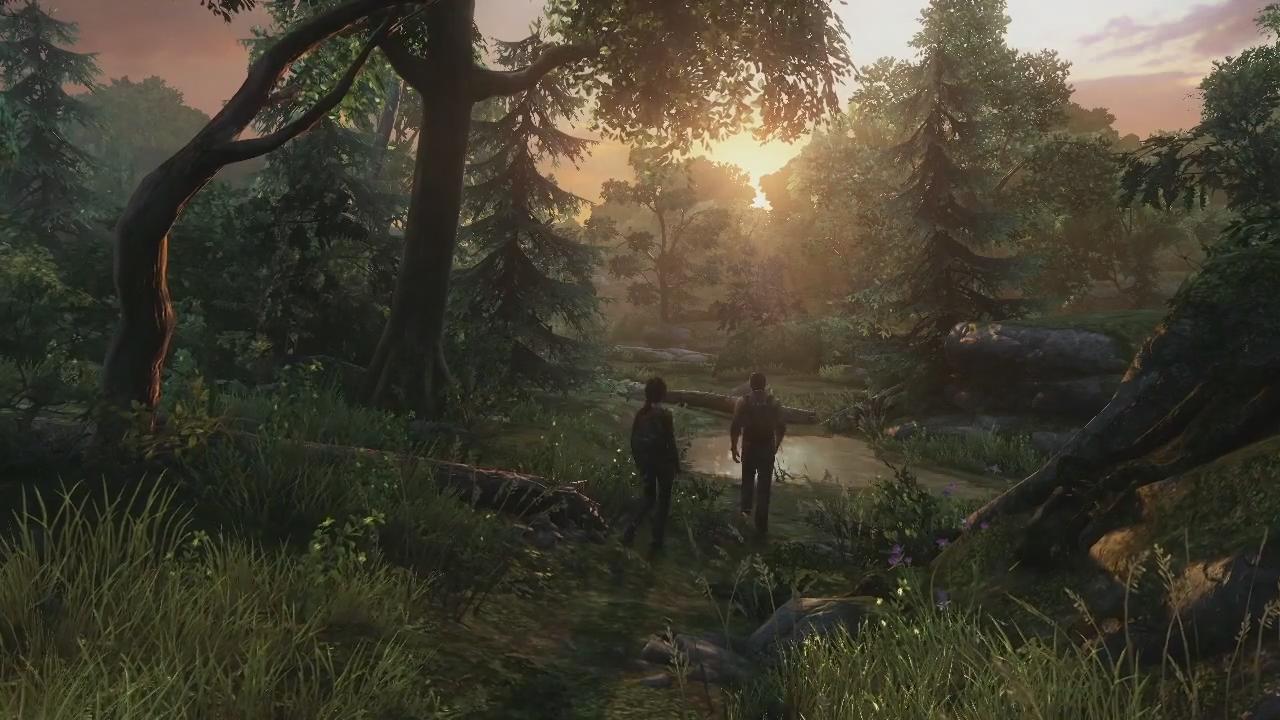
I wrote a little bit last week about my experience with TellTale's The Walking Dead and the rise of what I've come to call "film-games." In that post, I also talked about The Last of Us, another of my favorite games of all time. The two games share a surprising amount of similarities (while feeling like entirely different games), but one that particularly catches my attention is that both could are works of Neo-Romanticism.

(*Sigh* I guess I'm morally obligated to tell you, I will be "spoiling" these games, to the extent that the enjoyment of art really depends on the revelations of its plot.)

Tuesday, November 12, 2013

Moby Dick is a Game

In our Digital Culture class, we've already discussed a lot about the complicated idea of what type of book Moby Dick really is. Looking at the digital mediation post Dr. Burton wrote brought me back to that question as he encouraged us to deliberately disrupt the text to see it in a new light. After reading Ian Bogost's How to Do Things with Videogames and pondering game design a lot lately, I started to mediate Moby Dick through the lens of game design, and I wish to argue here how Moby Dick is a game--not that it could be adapted into a game well, but that the book itself is a kind of game.

Wednesday, November 6, 2013

Girl Wide Web 2.0 Video Review

Here is my video review of Girl Wide Web 2.0. First let me preface this by saying that I don't consider myself a very good speaker, so sorry for all of the "umm"s and the stumbles. Also, I'm sorry for the annoying watermark on the video. The software that I downloaded to make the video was a trial, and it didn't tell me until I was done making the video that it was going to add a watermark to it. Yay for hidden stipulations.

Read my Goodreads review here.


Thursday, October 31, 2013

Monuments of our Age: Foundations of Civilization in the Digital World

 Creative Commons Attribution Noncommercial Share-Alike 2.0
By Greg Bayles, graphic remixed from Mary Harrsch
Last week, I posted a bunch of my curation findings as to digital civilizations specifically. This week, however, I've been working to flesh out my research in terms of the requirements for civilization to exist, and I've had some pretty good success through both social and more traditional modes of inquiry. On Monday, I posted to my Facebook and Google+ profiles asking for people's insights as to the foundational elements of civilization. Google+ didn't yield a ton--just a post from my sister--but I was able to start up a rather healthy conversation on Facebook and got a lot of insights from friends, especially those studying political science, history, and anthropology.

You can check out the conversation below if you prefer to just read through the responses (I personally like the one about chocolate-covered almonds), but to sum up the arguments, my friends gravitated toward five or six main points:
1. Social surplus (extra resources)
2. Unified sense of culture
3. Code of law
4. Cohesive economic system
5. Territory (according to the UN)
6. A population (a more obvious but nonetheless essential component)

Tuesday, October 29, 2013

Modding: Games' Remix Culture

One of the major aspects of remix culture that Dr. Burton touched on but didn't have much time to get into is modding. Essentially, modding is digging into the code of an existing game to alter it in some way. Mods range from basic "unofficial patches" that just fix a few bugs that annoy players to complete overhauls that change nearly every aspect of the game such that it's unrecognizable from the original.

Interestingly, modders haven't faced much trouble with copyright issues, and many of the best mods have been adopted by the games' original developers and released as official content. The main reason for this is good mods sell games, and bad mods get ignored. If a mod is good enough, people will buy the original game just to play the mod, so it's in the developers'/publishers' interests to just let the modders do their thing. On the modders' end, it's good for them because it's an easy way to show their coding skills and get it out to a lot of people quickly without having to build a game from scratch.

Just like music remixes, however, mods have produced an entire subculture, and many of the world's most successful games actually began as mods. I'll show you three quick examples: Counter Strike, League of Legends/DOTA 2, and DayZ.

Wednesday, October 23, 2013

Girl Wide Web 2.0: A Look into Digital Identity

I want to continuing exploring identity, so for my book I chose Girl Wide Web 2.0: Revisiting Girls, the Internet, and the Negotiation of Identity. I'm hoping this book can explain more about how digital identity varies from different cultures and locations.

Preview

Through the preview of the book, it looks like the book does spend some time defining the differences in which girls determine their digital identities, but it also looks like it spends some time with some of the methods that are used online, such as MySpace and fangirl websites. It seems to spend a lot of time on the online communities that girls participate in, which is helpful for defining their identities.

Early Social Proof

No one responded to my update on Twitter. I was unsuccessful doing searching for conversations about the book as well. I'm going to try to reach out to one of the contributors of the book, because it looks like several of them are on Twitter. We'll see how that goes.

Similar Books

Instant Identity (Mediated Youth) by Shayla Thiel Stern
Growing Up Girls: Popular Culture by Sharon R Mazzarella
Grown Up Digital: How the Net Generation is Changing Your World by Don Tapscott

It looks like these books are pretty similar in their intent except for the last one Grown Up Digital. This one's intent lies more along the lines of how digital culture is changing and how the "net generation" is changing it.

Understanding the Digital Exodus with Jane McGonigal's Reality is Broken

As somewhat of a social critic and one who at various times has been thoroughly involved in video games, I couldn't resist Jane McGonigal's title: Reality is Broken: Why Games Make Us Better and How They Can Change the World. It seems like McGonigal has a lot of great videos online about video games and virtual reality, so I see her work as key in understanding the 'exodus' to digital worlds.

Book Preview

After spending ten minutes previewing McGonigal's book, it looks like McGonigal's central question is this: "What if we decided to use everything we know about game design to fix what’s wrong with reality?" In addressing this topic, it looks like McGonigal will cover how video games can help us to be happier, more successful, and more productive. I really found her reference to Heroditus's concept of games to be compelling and grounding in a sense, and I think I'd like to look more at the sociological and historical foundations of video games.

Meaning in Video Games: Ian Bogost's How to Do Things With Videogames

I'm interested in establishing some ground work for talking about and exploring the ways video games create meaning. Ian Bogost is someone who's been on my radar for awhile but I haven't yet taken the time to dig into his work. This will be a good opportunity to expand on my knowledge and explore new ideas.

Preview:
After an initial view of the first couple pages of the intro and the about the author section, I found some interesting stuff in the back. For one, this book comes from a series called "Electronic Mediations," and the rest of the books of the series are listed in the back, and they all sound amazing. Also, rather than just a list of sources, he has a separate, multi-page "Gameography." It looks like this book is exactly the kind of stuff I've been looking for.

Early social proof:
No one responded on Google+ or Twitter, but I've been talking with my wife for the past couple days about making meaning in video games, and pretty quickly she's gotten on board. She helped me come up with a game idea about a Dad reading stories to his son at night and the player taking over as the dad as the hero of each bedtime story. I can tell there's a lot of potential in this topic and it's easy to get people excited about it.

Similar Books:
Apart from Bogost's other books, some titles that seem to always pop up alongside this one are Jane McGonigal's Reality is Broken, which I've already read and enjoyed, but also some other titles that intrigue me, such as What Video Games Have to Teach Us About Learning and Literacy by James Paul Gee, which I noticed is also on our class's Goodreads bookshelf, as well as Tom Bissell's Extra Lives: Why Video Games Matter. The rest of the books in the "Electronic Mediations" series also probably have a lot in common.

Monday, October 21, 2013

Storify: The Future of "Primary Documents"

History has always depended on "primary documents"--the words and artifacts of the people who were actually there when important things happened. History in the digital age is no different. We want to get at the source of everything, find the hub of activity online. Thanks to hypertext, it's no easier than ever to jump through the rabbit hole of references back to the "primary document" of anything on the internet--the original YouTube video, the original Tweet, the original Facebook post. Storify is a service that plays to this ability and helps you curate digital primary documents into a "story."

Screenshot of the landing page for Storify

Sunday, October 20, 2013

Presenting at RMMLA: My Experience

On October 10, I had the opportunity to present my paper, "'Such Stuff as Dreams are Made On': Shakespeare and the Cultural Legitimacy of Video Games" at the Rocky Mountain Modern Language Association conference. The conference this year was in Vancouver, Washington (no, not Canada and no, not DC). It is unusual for an undergraduate to present at this conference and I was very grateful for the opportunity.

I was very pleasantly surprised by how well my paper was received. Even before the conference started, the panel chair, a professor from Utah State, told me to not be nervous because they were a nice group of people. It also helped that everywhere we went there seemed to be another BYU graduate wanting to talk to us--in the airport, in the hotel, in the room I presented in--everywhere. I was really worried that they'd hear I was an undergraduate and someone would say something about how I wasn't supposed to be there or ask how I ever got in to the conference. I was also worried that I'd get to the conference room and the other presenters would speak and it would all go way over my head and my paper would seem completely juvenile in comparison. Actually, neither of those things happened. I found the other papers super interesting and exciting, and when the time came for Q&A after the presentations, I actually got the bulk of the questions (this might have been in part because I was the last presenter, but it still felt good) and I held my own and had answers for everyone. (Surprisingly, I didn't get the chance to use any of the ten or so answers I had come up with for the questions, "But how can games be art when they're so violent?" because no one asked any version of that question.)

After I finished my presentation, the panel chair asked if I was going to publish my paper and asked the room if they thought I should. They were all very supportive in saying I should publish it somewhere. A woman from The University of Baltimore asked me to email it to her to give to their new Department of Simulation and Digital Entertainment. She said they would love to read it.

Overall, it was an amazing experience and much less intimidating than I thought it would be. The paper was received very well and I'm more excited than ever about my prospects studying video games as an art form.

The full text of my paper can be read and downloaded here.
The accompanying PowerPoint can be viewed and downloaded here.

And, finally, here's a video my lovely wife took of my presentation: