Showing posts with label curation tools. Show all posts

Wednesday, December 11, 2013

You Are What You Pin: An Analysis on Pinterest Identity

Below is the link to my final paper.


P.S. Sorry about the screenshots from the survey. They are getting messed up when the .pdf is uploading to Google Docs, and I'm not sure how to fix it. Here are the links to the pinboards if you would like to look at them.

Extroverted
Introverted
Sensing
Intuition
Feeling
Thinking
Prospecting
Judging

Friday, November 1, 2013

Curating with Pinterest

First thing is first. Sorry about the late post. I got some exciting news on Thursday and was a little distracted!

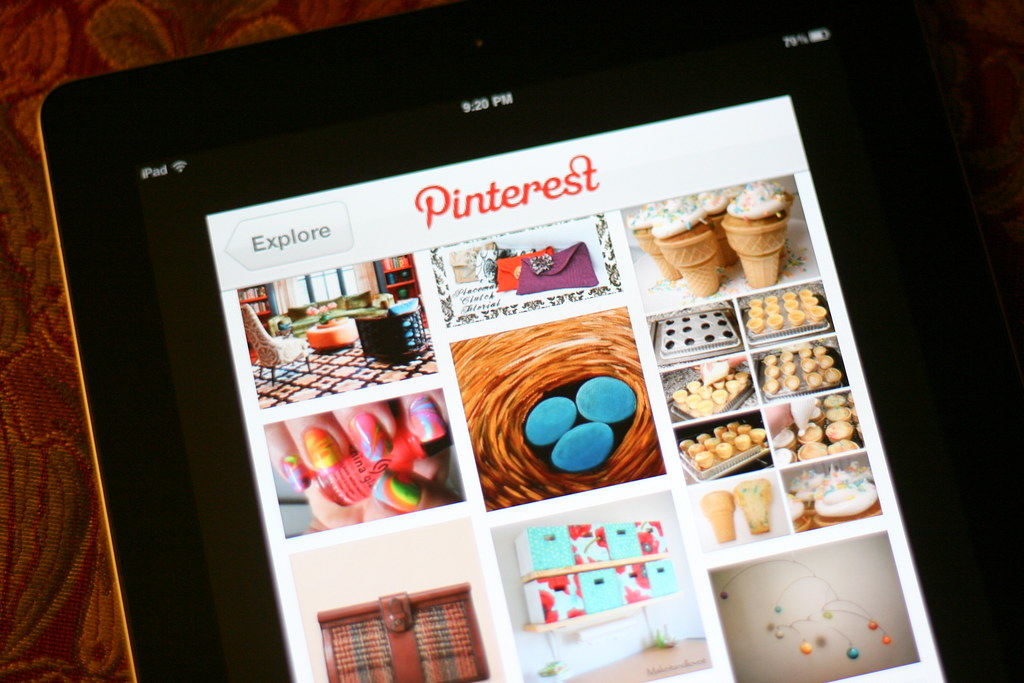
For my curation tool, I have been using Pinterest. Pinterest, as you may well know, is a very interesting medium. My purposes in using this as my creation tool are to study identity according to what is posted on individual users accounts. Think of it as "you are what you pin," if you will. I think the main point of Pinterest is used as an expression of individuality, although the interesting thing is people don't really pin their own content; they repin other people's content. I also think this is relevant with the book that I chose: Girl Wide Web 2.0, and I'm excited to see how each contribute to the idea of girls' and women's identity.

Courtesy of jackie vanover on flickr.com

Thursday, October 31, 2013

Monuments of our Age: Foundations of Civilization in the Digital World

 Creative Commons Attribution Noncommercial Share-Alike 2.0
By Greg Bayles, graphic remixed from Mary Harrsch
Last week, I posted a bunch of my curation findings as to digital civilizations specifically. This week, however, I've been working to flesh out my research in terms of the requirements for civilization to exist, and I've had some pretty good success through both social and more traditional modes of inquiry. On Monday, I posted to my Facebook and Google+ profiles asking for people's insights as to the foundational elements of civilization. Google+ didn't yield a ton--just a post from my sister--but I was able to start up a rather healthy conversation on Facebook and got a lot of insights from friends, especially those studying political science, history, and anthropology.

You can check out the conversation below if you prefer to just read through the responses (I personally like the one about chocolate-covered almonds), but to sum up the arguments, my friends gravitated toward five or six main points:
1. Social surplus (extra resources)
2. Unified sense of culture
3. Code of law
4. Cohesive economic system
5. Territory (according to the UN)
6. A population (a more obvious but nonetheless essential component)

Monday, October 28, 2013

Curating with Storify: First Result

Working with Storify and reading Ian Bogost's How to Do Things With Videogames, I've finished my first round of curating.

As a curation tool, Storify has its strengths and weaknesses. It's best for smaller curation projects, that perhaps together build up into a larger body of collected work. Each "story" is best focused and tight, however, with a clear concept combining the elements. I did a merger of a story and more traditional curation by writing a story following the "video games as art" debate since Roger Ebert's famous denunciation of the medium, then provided a (very) long list of links at the bottom for further discussion.

One cool thing about using Storify is because it's a fairly new tool, I'm in the top three results when you search for videogames on the service.

I found it really easy to use and really kind of fun. I hope it catches on.

Here's my first Storify story for you to peruse:

http://storify.com/pcbills/video-games-as-art

Monday, October 21, 2013

The Curation of Pinterest

I'm sure most of us are familiar with Pinterest. You pin something, for example a blog post or a video, to a digital pinboard, and from there, others can see and repin what you have pinned. The entire site is essentially used for curating different content for individuals.

Courtesy of  Bunches and Bits {Karina}

But it does go a little bit further than that. While doing some research, I came across some interesting cases where Pinterest was being used to go beyond the digital world and actually is applied in the physical world.

The first thing I came across what this article titled "Highlights from 'The Pinterest Diet.'" Essentially, this woman wrote a book about how she used Pinterest to lose weight. The author, who wrote this article as well, said, "The diet combines my innovative program of eating clean, satisfying foods with Pinterest's capacity to provide a never-ending supply of recipes, workout plans, and inspiration." A few steps in her plan include creating the pinboards to help achieve this goal and pinning for at least ten minutes a day. She concludes by saying, "By spending time pinning, you're taking care of yourself. You're nourishing your creativity, you're nourishing your mind, and you're nourishing your body. This helps you to refocus on your goals and stay determined to reach them." (I think that's stretching it, but you get the idea.)

Google Alerts: the Now, the What, the Who

I've been looking into Google Alerts as a curation tool of late, as I wrote in a recent blog post, but I wanted to throw some thoughts out there as to its usefulness and some of the things that I've found .

My general impression is that I'm very impressed. I've used Google Alerts before to monitor people, but I've never really approached it topically, and I have to say, I've really been missing out on a valuable tool. I put up three alerts (queries) on Thursday and have been receiving daily updates on "digital worlds," "virtual worlds," and "virtual civilizations," and while I've gotten a few things that were less applicable to my particular area of interest, I've discovered a lot of really interesting recent, meaningful resources and found people with whom I can connect.


Storify: The Future of "Primary Documents"

History has always depended on "primary documents"--the words and artifacts of the people who were actually there when important things happened. History in the digital age is no different. We want to get at the source of everything, find the hub of activity online. Thanks to hypertext, it's no easier than ever to jump through the rabbit hole of references back to the "primary document" of anything on the internet--the original YouTube video, the original Tweet, the original Facebook post. Storify is a service that plays to this ability and helps you curate digital primary documents into a "story."

Screenshot of the landing page for Storify

Thursday, October 17, 2013

Google Alerts (Teaser) and Mirror's Edge

I've been looking into Google Alerts as a way of monitoring the Internet for information on digital worlds and civilizations, and I'm thinking that this will be a really effective way of catching the latest information on new technologies and trends. I made three different alerts today, and I'm going to monitor them over the next few days to see what quality of information it really picks up, and then I'll post a review on Monday as to my findings.

Creative Commons License, Tom Francis
In other news, I recently stumbled on a game called Mirror's Edge, and I've been enjoying exploring that world and thinking about the implications of some of the ideas. The game is based in a dystopian world wherein a hegemonic political/police entity controls all information highways. As a result, the only safe means of transporting information is through runners who use parkour (you should watch this: it's amazing) to navigate rooftops and abandoned buildings in their efforts to evade capture. The game originally interested me because of the parkour aspect, in that I'm working on a novel that features parkour runners or "kites," but in any case, as with most well-made games, Mirror's Edge has got me thinking about some other important ideas.

Digital Portfolios

Last week I posted on Google+ about digital portfolios while I was trying to put my own digital portfolio together. Dr. Burton suggested that I follow up on how common they are becoming.

The first thing I did was search to see exactly what is out there when it comes to digital portfolios. Off the bat, I found that there were two main groups using digital portfolios: artists or photographers and students. The artists and photographers are kind of self-explanatory; it's an easy way to display their work. But the students using these digital portfolios are of all ages, elementary- to college-aged students.

There are tons of sites (and tons of pins on Pinterest) dedicated to setting up digital portfolios for kids, which really surprised me. These kids are already dealing with digital portfolios and will probably be mostly using the digital medium as means for applying for jobs in the future. That's how fast this is catching on.


While continuing my research, I came across a video blog that demonstrates how to make a digital portfolio using PowerPoint, which I wouldn't have even thought to do. It's a cool idea if you are considering a way to make your digital portfolio. However, there are websites or apps, such as Weebly or Deviantart, you can use as well, which is how I created my digital portfolio. (If you want to check it out, click here.)

So, what's the big deal? Why are portfolios switching from print or physical copies to digital? Well, for one, it's convenient. If it's on a website, it's really easy to update. For employers, it's easy to keep track of and it doesn't take up a lot of space. Most importantly, perhaps, is that it shows employers that you are tech savvy.

What do you think about digital portfolios? Do you think they are just another way to showcase skills to an employer, or are they more than that? Do you think it's a good idea that kids are starting to incorporate these in their curriculum at such an early age?